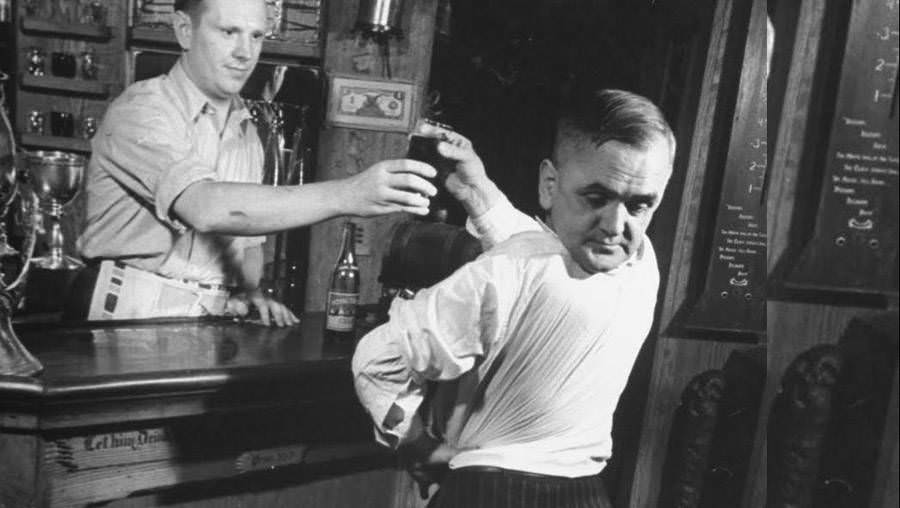
Under the harsh glare of a showman’s spotlight, Martin Laurello—billed as the “Human Owl”—demonstrates the unsettling party trick that made him a Coney Island attraction: a neck turn said to reach a full 180 degrees. In the photo, he twists his head back over his shoulder with a practiced calm, turning a basic human gesture into something uncanny. The frame catches that moment when curiosity and disbelief meet, exactly the reaction a sideshow depended on.
Behind the performance sits the world that sold it: a bar-like counter, trophies and bottles, and a handler or attendant extending a drink as if the feat were just another evening’s entertainment. The casual setting makes the act feel even stranger, blurring the line between stagecraft and everyday life. Details like the signage and cluttered interior hint at the bustling, commercial rhythm of Sam Wagner’s freak show—part spectacle, part business.
Coney Island in 1938 was a place where crowds came to be shocked, amused, and reassured that the unusual could be neatly packaged inside a ticketed booth. Laurello’s “Human Owl” persona speaks to the era’s fascination with bodily extremes and the carefully managed thrill of the abnormal. For readers searching the history of Coney Island sideshows, freak show performers, and vintage amusement culture, this image offers a vivid glimpse into how wonder was marketed—and how “weird” became a livelihood.