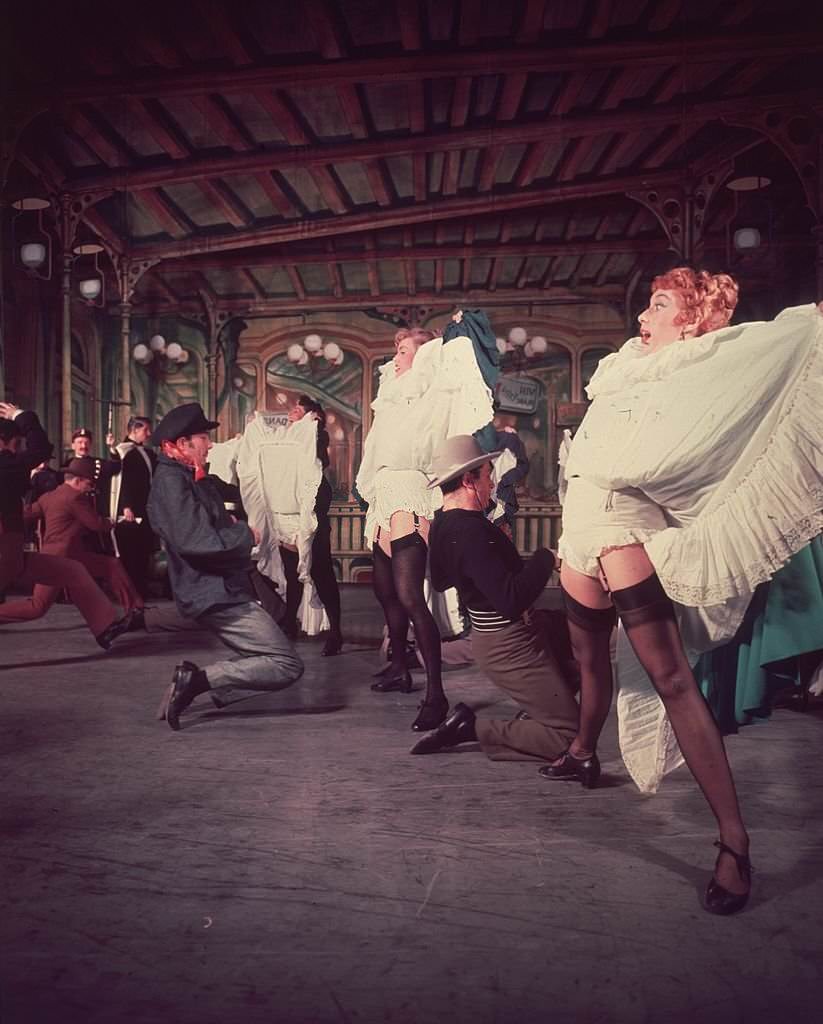
Ruffled petticoats billow outward as Can-Can dancers hit a high-kicking line on stage at the London Coliseum, a burst of controlled chaos framed by the theatre’s ornate set. The performers’ black stockings and heeled shoes sharpen the silhouette of each pose, while the lifted skirts create a fluttering curtain of white fabric that signals the dance’s trademark bravura. Captured in 1954 during a Cole Porter show, the scene brims with mid-century musical theatre glamour and precision.
Alongside the dancers, costumed men in hats and dark suits crouch and lunge in choreographed counterpoint, lending the number a comic, cabaret-like energy. The staging emphasizes movement in every direction—knees bent, torsos angled, arms mid-gesture—so the viewer can almost hear the rhythm driving the ensemble. It’s a reminder that the Can-Can was never merely decorative; it demanded stamina, timing, and a fearless commitment to spectacle.
Beyond the immediate dazzle, the photograph offers a window into postwar entertainment in London, when lavish revues and American songbook sophistication drew audiences eager for color and escapism. The details—period hosiery, layered skirts, and bold stage makeup—underscore how fashion and performance intertwined to create an instantly legible style. For anyone searching the history of the Can-Can, Cole Porter productions, or 1950s London theatre culture, this image distills the era’s high-energy showmanship into a single, kinetic moment.