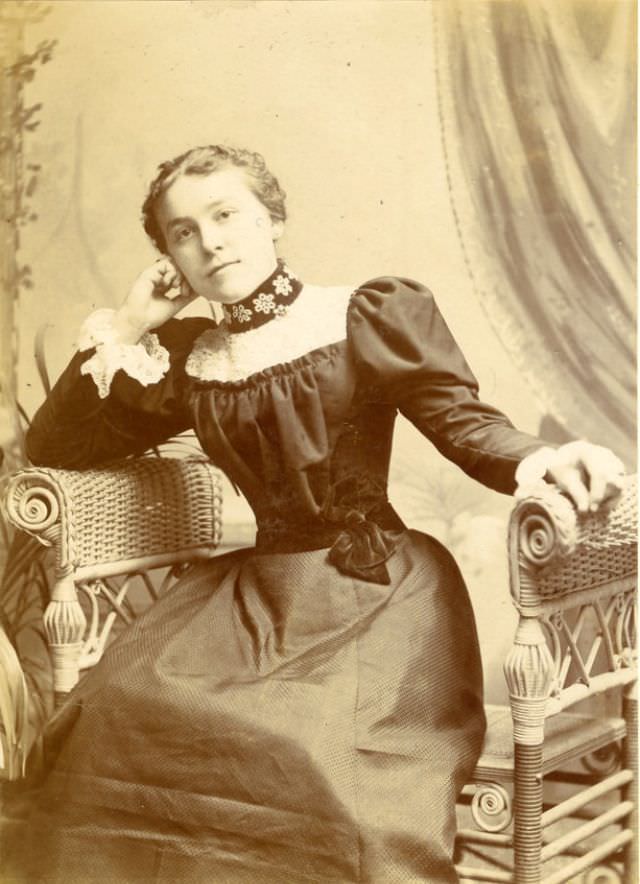
Leaning with practiced ease against an ornate wicker chair, a young Victorian-era woman meets the camera with a calm, steady gaze. Her dark dress is tailored to emphasize a narrow waist, the smooth line of the bodice drawing attention to the unmistakable silhouette shaped by a tight corset beneath. Soft studio lighting and a painted backdrop give the portrait the gentle, staged elegance common to late 19th-century photography.
Details of fashionable respectability appear everywhere: puffed shoulders, fitted sleeves, and crisp white cuffs that brighten the hands and wrists. A high, decorative collar—trimmed with floral motifs—frames the face and reinforces the era’s preference for modest coverage above the neckline, even as the figure is carefully molded below. The slight tilt of her head and relaxed arm arrangement suggest a sitter accustomed to posing, balancing poise with a hint of intimacy.
Corsets were more than an “indispensable undergarment” in Victorian fashion; they were the unseen architecture supporting clothing, posture, and social ideals of femininity. Portraits like this functioned as both personal keepsakes and style statements, capturing how beauty standards were engineered through layers of fabric, boning, and disciplined fit. For anyone exploring Victorian women’s clothing, corsetry, and late 19th-century culture, the image offers a vivid snapshot of how everyday fashion became a carefully composed identity.