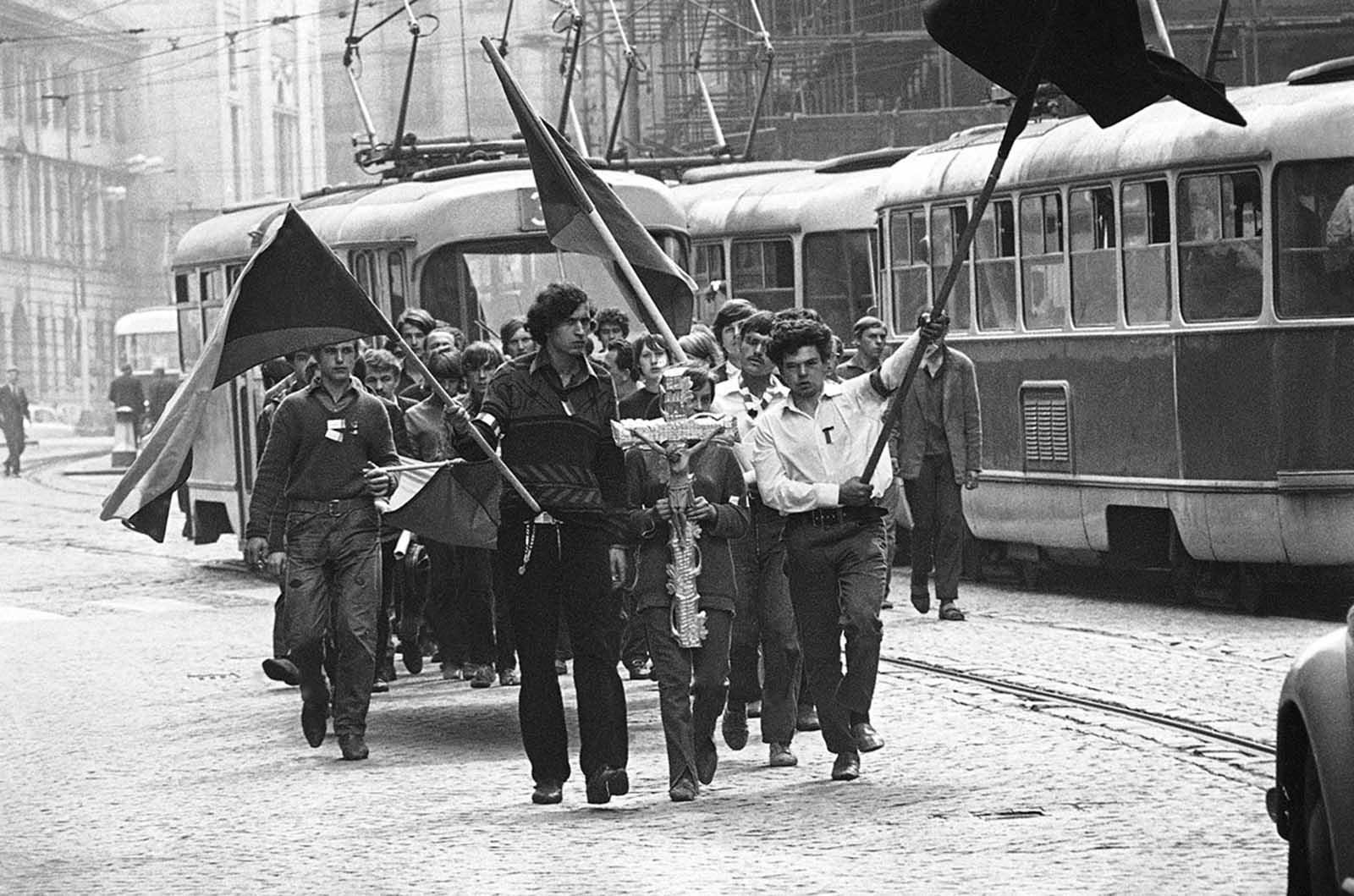
Down a cobbled Prague street, a line of youths moves forward with the steadiness of ritual, the weight of grief visible in their faces and in the crucifix carried at the center of the procession. Flags rise above the crowd like sailcloth in a hard wind, their fabric cutting sharp shapes against the city’s pale façades and a haze that suggests smoke, dust, or the aftermath of turmoil. Trams and overhead wires frame the march, reminding the viewer that everyday urban life continues to hum alongside moments of public mourning.
The title anchors the scene to August 27, 1968, when a friend was shot by the Soviets and these young people walked him toward burial. In that context, the crucifix reads not only as a Christian symbol but as a statement of identity and moral protest, carried openly through streets watched and remembered. The mourners’ plain shirts, armbands, and determined posture convey a collective decision to be seen—an insistence that the dead will not be reduced to silence or statistics.
For readers searching for Prague 1968 photos, Soviet invasion aftermath, or the human story of civil unrest, this image offers an intimate view of how politics enters the most personal rites. It speaks to a generation caught between hope and occupation, turning a funeral into a quiet demonstration of solidarity. What lingers is the contrast: steel trams, rigid infrastructure, and the soft, stubborn movement of people carrying faith, flags, and a friend’s memory through the city.