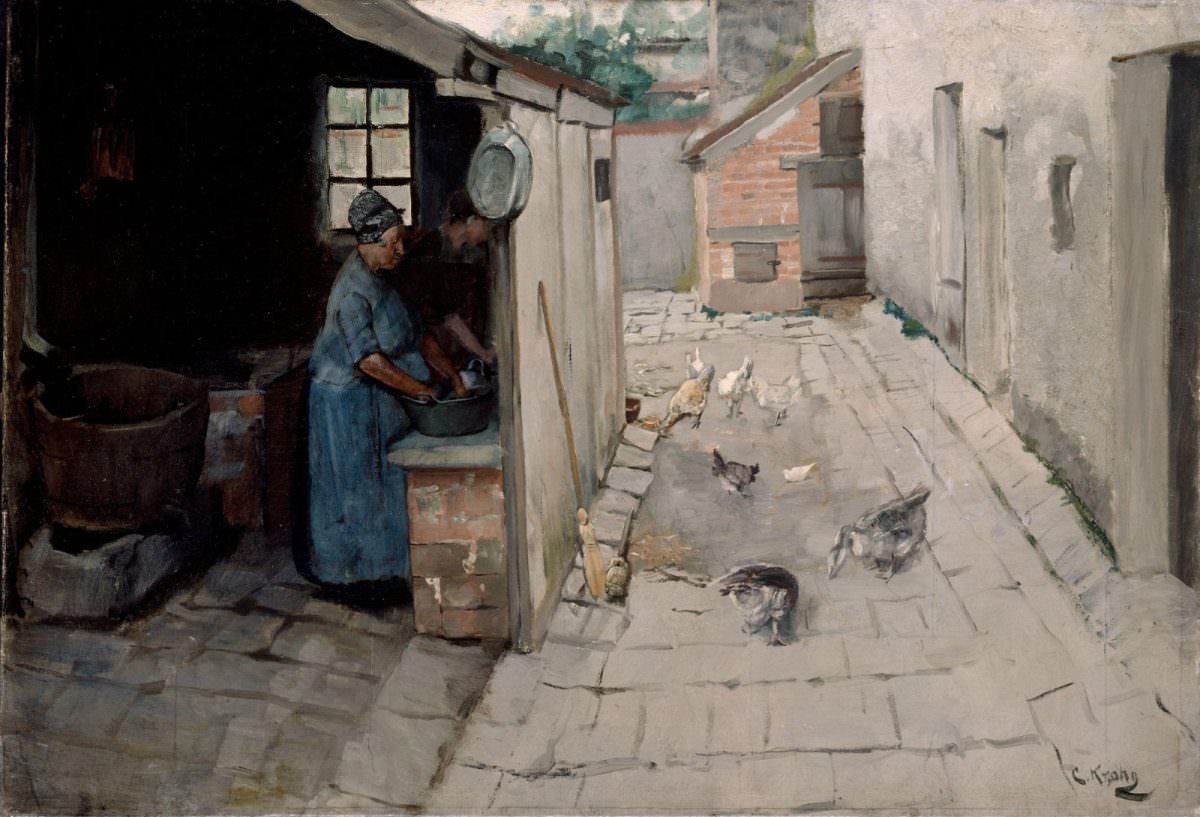
Morning light spills into a modest farm outbuilding, catching the edges of a stone-paved yard and the pale walls that frame it. At the threshold, two figures bend over a basin set on a low brick stand, their work half-hidden in the cool interior shadow. A hanging pan, a small window, and the rough textures of wood and plaster anchor the scene in everyday practicality, while the title “Farm Interior, 1900” places it at the turn of a century when domestic labor still depended heavily on handwork.
Across the courtyard, a scatter of poultry—hens and a few larger birds—pecks and wanders with the unhurried confidence of animals accustomed to open space. The composition leads the eye from the dark, utilitarian room to the brighter yard beyond, where simple doors and outbuildings suggest a compact working farmstead. Even without a grand event or dramatic pose, the quiet choreography of chores and livestock evokes rural routine: water drawn, vessels washed, feed measured, and the day set in motion.
For readers drawn to historical rural life, this artwork offers a vivid glimpse of farm domesticity around 1900, emphasizing tools, textures, and the rhythm of work rather than spectacle. It’s an intimate kind of history—one that lives in brick and stone, in the angle of a doorway, and in the small congregation of birds at one’s feet. As a WordPress feature image or gallery entry, it pairs well with posts on agricultural heritage, household labor, and the material culture of early twentieth-century farms.