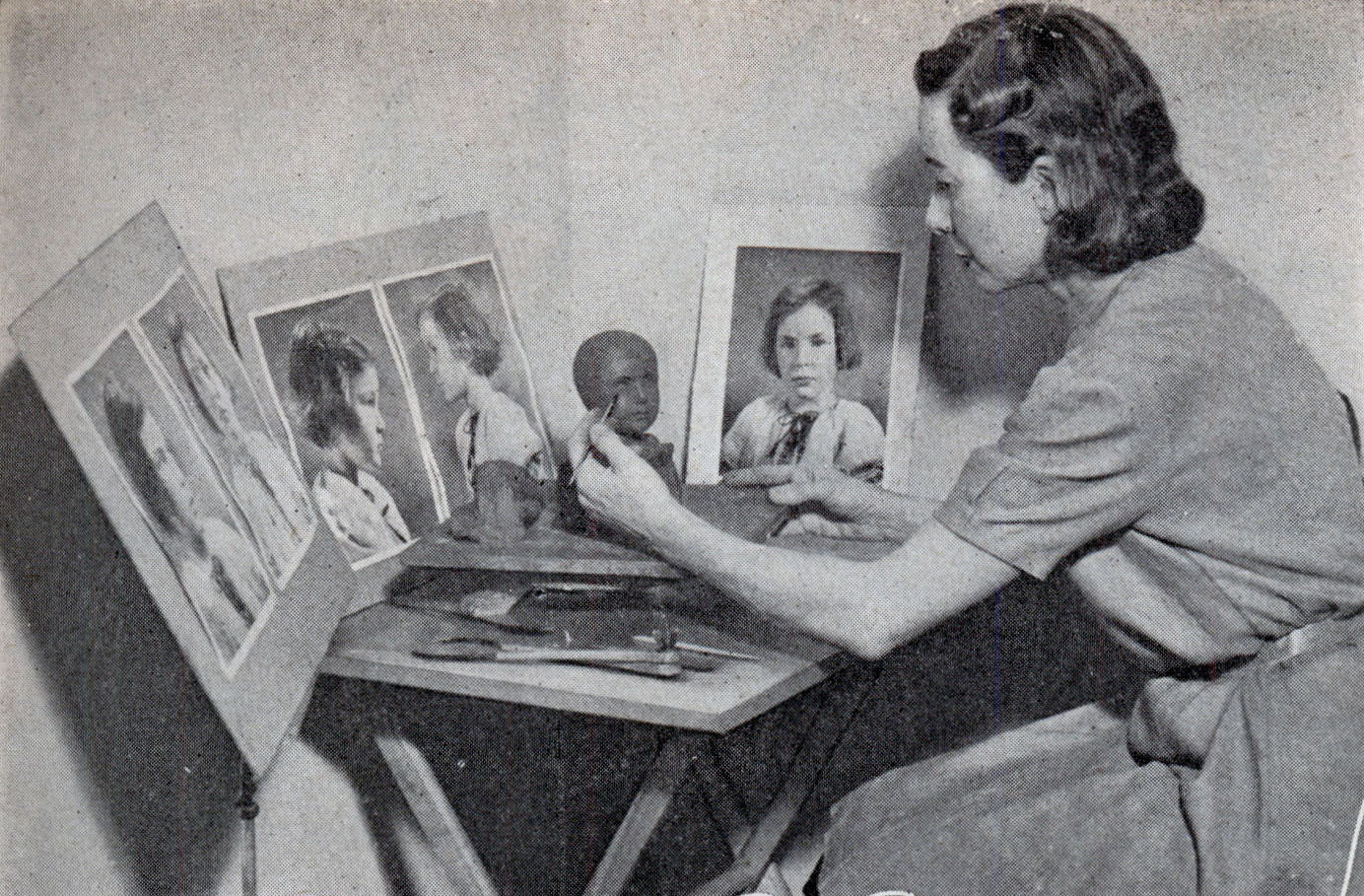
In a quiet studio corner, an artist leans toward a small clay head, shaping features with careful, economical movements. Several reference photographs are propped around the work area—different angles of the sitter’s face—turning the table into a little wall of gaze and expression. The composition underlines the title’s method: working from photographs first, then building the likeness in clay before anything more final is attempted.
What stands out is the practical choreography of making a portrait sculpture: the eye flicks from print to clay, then back again, testing proportions and refining the planes of the face. The simple table, hand tools, and snug arrangement of images suggest a disciplined craft rather than romantic inspiration, where accuracy is earned through repetition. It’s a reminder that even “life” in sculpture often begins with flat paper references—capturing character through multiple views before the form fully emerges.
For readers interested in art history and studio practice, this historical photo offers a grounded look at process—how photography and sculpture intersect in the search for likeness. The scene also speaks to the broader story of modern portrait-making, when accessible photographs made it possible to model a subject without extended sittings. Seen today, it’s both a document of technique and a small tribute to the patience behind finished artworks.