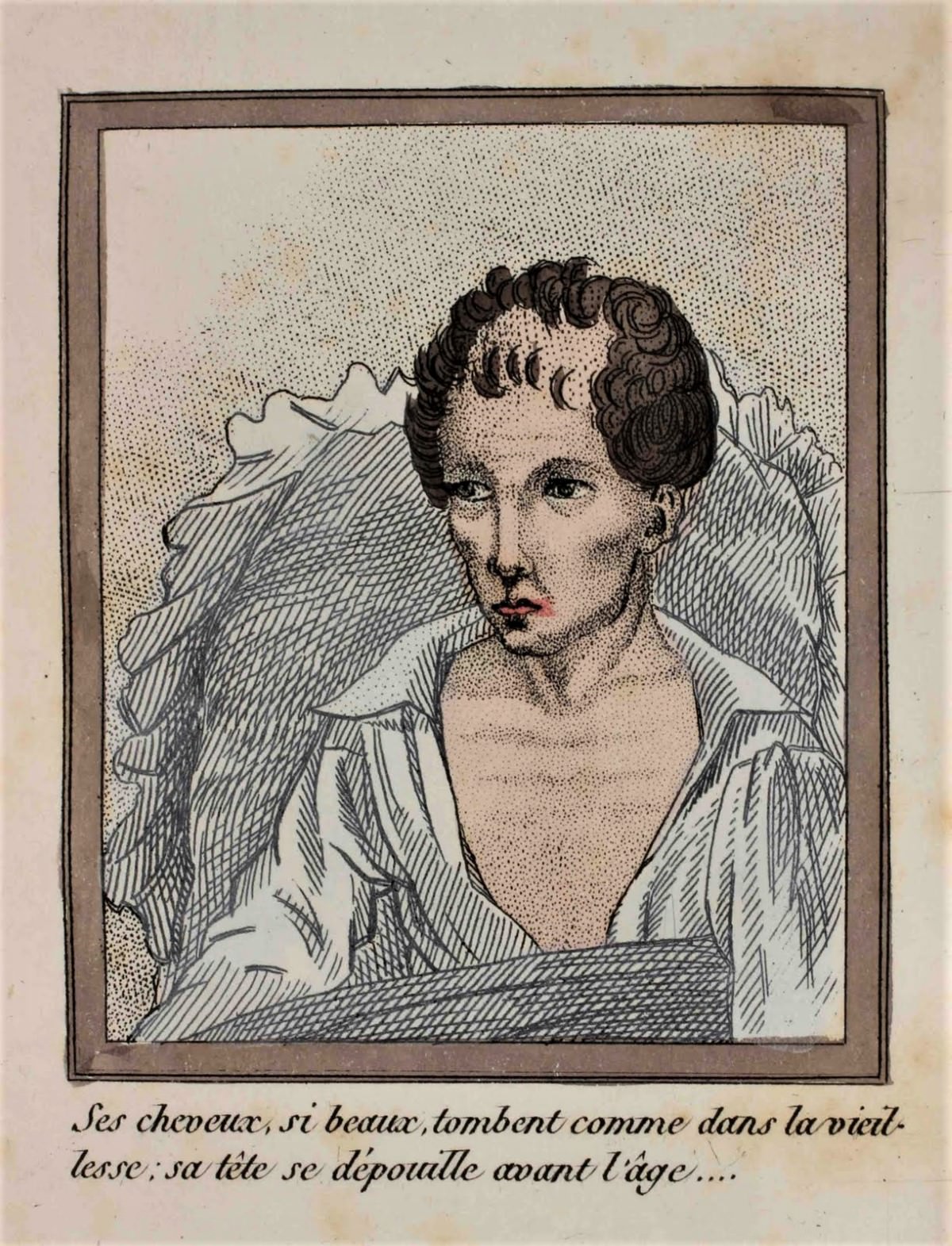
A pale-faced young man sits propped against pillows, his open shirt slipping from the shoulders as if illness or exhaustion has stolen the urge to dress properly. The artist draws the viewer’s eye to the scalp: curls still cluster at the sides, yet the crown looks unnervingly bare, and the hairline seems to retreat in uneven patches. Fine hatching and stippled shading give the portrait a printed, hand-colored feel, while the subject’s downcast gaze and tight mouth suggest embarrassment, worry, or quiet resignation.
Beneath the framed scene, a French caption underscores the drama implied by the title—beauty and youth set against sudden physical decline. In earlier centuries, long, lustrous hair carried heavy cultural weight, signaling vitality, attractiveness, and social standing; losing it “before age” could be read as a personal tragedy and a public warning. The combination of intimate bedroom setting and moralizing text hints at a broader message typical of period prints: the body as a ledger where life’s habits, misfortunes, or maladies leave visible marks.
For readers interested in antique illustration, medical history in art, or the symbolism of hair loss, this artwork offers a striking example of how private anxieties became publishable stories. The careful linework around the eyes and cheeks, the theatrical framing, and the stark contrast between youthful features and premature balding all work together to heighten the sense of vulnerability. As a historical image, it invites reflection on how societies have long interpreted changing appearance—not merely as biology, but as narrative.