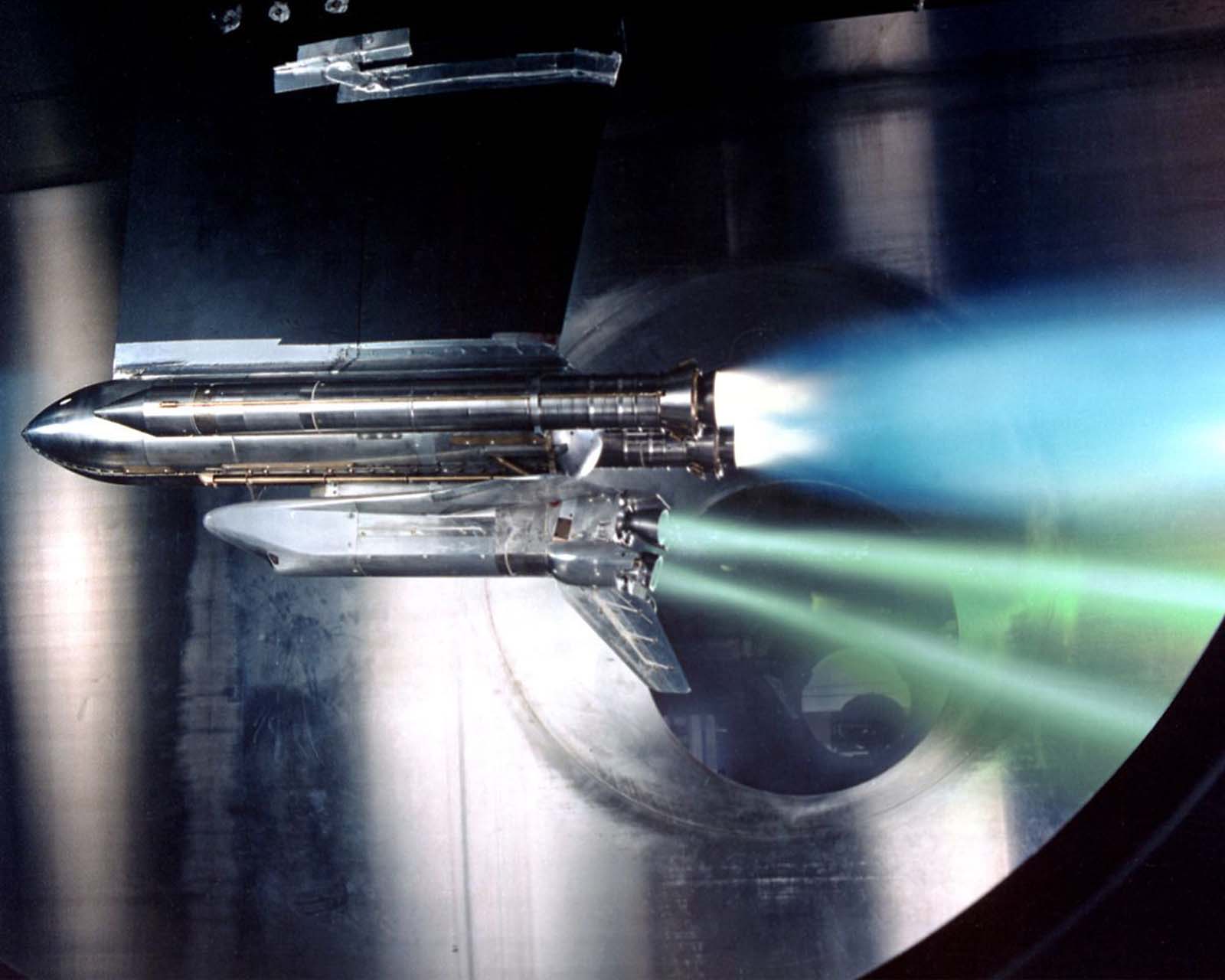
Inside the controlled roar of a wind-tunnel environment, a Space Shuttle orbiter model is seen mounted for an intense propulsion experiment at the John H. Glenn Research Center in 1988. Bright, colored streams spill from the aft end, creating a dramatic contrast against the dark interior of the test section and hinting at how engineers visualized exhaust flow and disturbance in real time. The polished surfaces and crisp edges of the miniature vehicle underscore how much precision was required to translate small-scale aerodynamics into full-scale flight confidence.
Failure testing may sound grim, yet it was one of NASA’s most practical tools for making the Space Shuttle main engine and its systems safer and better understood. By deliberately simulating off-nominal conditions, researchers could watch how the vehicle might respond when thrust, flow, or performance deviated from expectations, then use those findings to refine procedures, hardware, and analysis models. The scene’s luminous plumes serve as a reminder that sometimes the most valuable data comes from pushing machinery to its limits—under watchful instruments rather than in the open sky.
For anyone exploring inventions and aerospace history, this image offers a close look at the unglamorous but essential side of human spaceflight: verification, measurement, and hard-earned lessons. The Glenn Research Center’s legacy in propulsion and aeronautics is embedded here in the tunnel walls, the mounting hardware, and the carefully staged test conditions that made results repeatable. As a historical photo, it links the Space Shuttle era to the broader story of how research facilities turn risk into knowledge—and knowledge into reliability.`