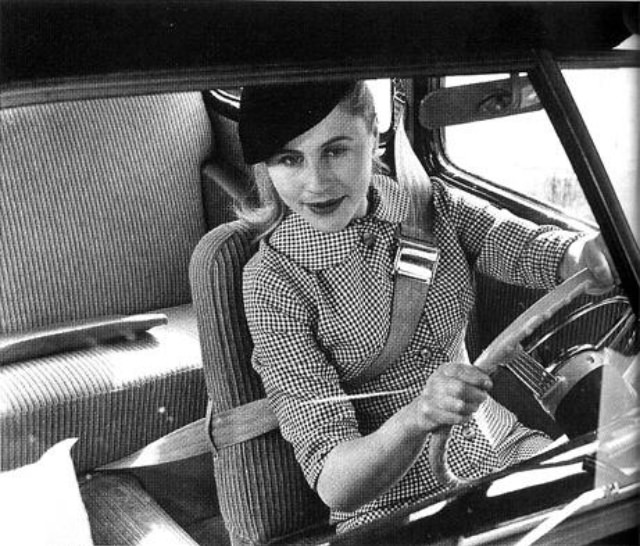
A driver sits confidently behind the wheel, dressed in a patterned jacket and hat, while a broad strap runs diagonally across the torso in a clear demonstration of the V-shaped three-point safety belt associated with Volvo. The car’s interior—bench-style seating, slim pillars, and a simple steering wheel—signals an earlier era of motoring, when comfort often took priority over crash protection. Yet the focus here is unmistakable: restraint, fit, and the idea that a seat belt can be both practical and wearable.
Volvo’s three-point safety belt is widely remembered as one of the most important inventions in automotive history, because it combines lap and shoulder restraint to hold the body’s strongest areas in a sudden stop. By spreading impact forces across the pelvis and chest instead of the head and abdomen, the design helped make survival far more likely in everyday collisions. It’s the kind of engineering that looks deceptively simple in a photograph, but changed what “standard equipment” would come to mean for drivers and passengers worldwide.
Looking closer, the hardware at the shoulder and the belt’s clean diagonal line hint at a turning point: safety moving from optional add-on to an expected part of car design. Images like this help explain how the three-point belt gained public visibility—not through abstract diagrams, but through real people sitting in real cars, demonstrating how it should be worn. For readers interested in Volvo innovations, road safety history, or the evolution of the seat belt, this photo serves as a compact reminder of how one practical idea could help save countless lives.