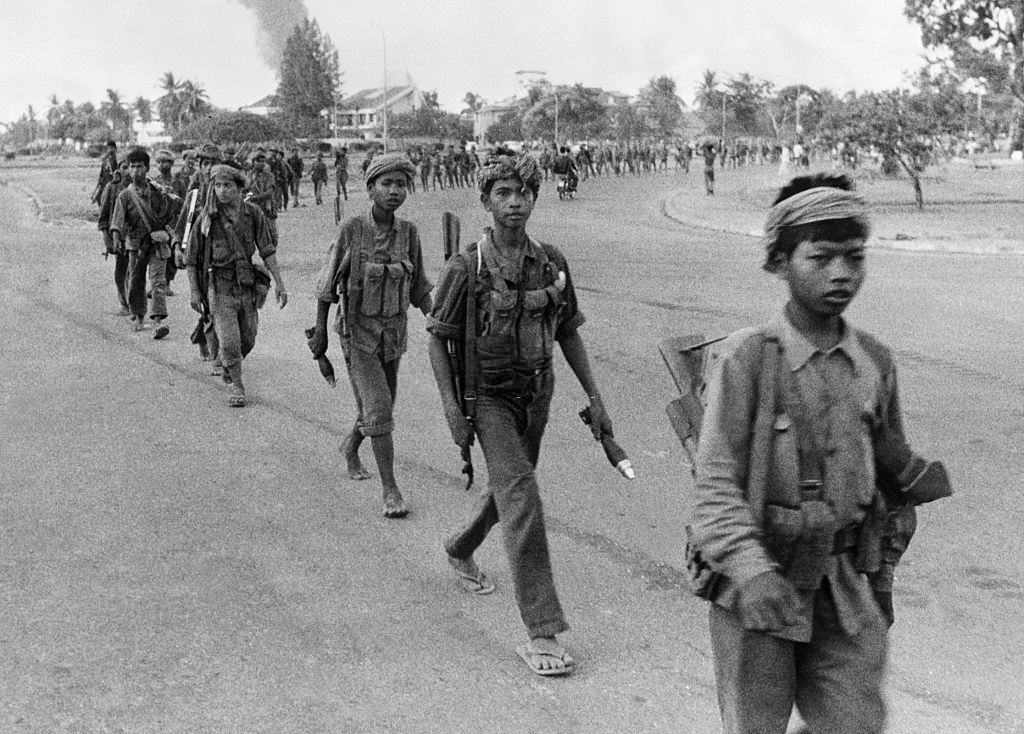
A file of teenage guerrilla soldiers moves down a broad roadway, rifles slung low and gear strapped tight to thin frames. Headscarves, caps, and worn uniforms blur into one another as the line stretches back toward the horizon, where more figures cluster near trees and distant buildings. The youngest faces are the hardest to forget—set between alertness and fatigue, they walk with the practiced rhythm of people who have learned war early.
The title places the scene in 1975, a pivotal year in Cambodia’s civil wars, when the Khmer Rouge advanced and power shifted with devastating speed. What reads at first glance like a simple march also signals organization and control: weapons carried openly, columns kept moving, and a landscape that feels simultaneously ordinary and unsettled. Even without a named street or landmark, the image evokes the moment when armed movements became the visible authority on everyday roads.
For readers searching for Khmer Rouge history, child soldiers in Cambodia, or photographs from 1975, this frame offers a stark entry point into the era’s human cost. It documents youth turned into combatants, the militarization of public space, and the uneasy calm that can hang over a city or town on the cusp of transformation. Seen today, the long line of young fighters invites reflection on how civil conflict reshapes childhood—and how quickly a country can be remade by men carrying guns and boys forced to follow.