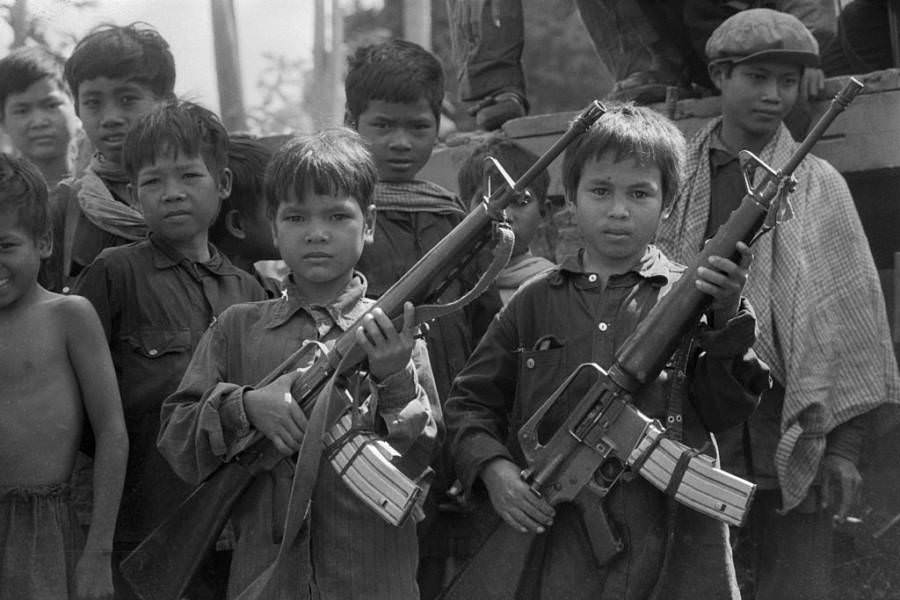
Barefoot boys crowd the foreground, their faces caught between curiosity and a practiced, guarded stare as they hoist oversized firearms for the camera. Two children hold rifles with prominent magazines and slings, gripping them with the awkward solidity of tools that were never meant to fit small hands. Behind them, other youths and a few older figures press in close, scarves and simple clothing suggesting a hard, improvised life shaped by conflict rather than childhood routines.
Set in Galaw, Cambodia, and dated circa 1979, the scene points to the chaotic aftermath of the Khmer Rouge era, when civil war and political violence fractured communities and militarized daily survival. The photograph’s blunt composition—children centered, weapons elevated—reads like propaganda and tragedy at once, hinting at how power can be displayed through youth made to perform toughness. In this frame, the line between combatant and captive feels thin, with the camera witnessing both coercion and a grim sort of normalization.
For readers searching the history of Cambodia, the Khmer Rouge, and the use of child soldiers in Southeast Asian conflicts, this image offers a stark entry point into that painful record. Details like worn shirts, close-packed bodies, and the confident presentation of machine guns underline how quickly war can rewrite social roles and expectations. As a historical photo document of civil wars in Cambodia, it invites reflection on what was lost, what was imposed, and how such images continue to shape memory long after the guns fall silent.