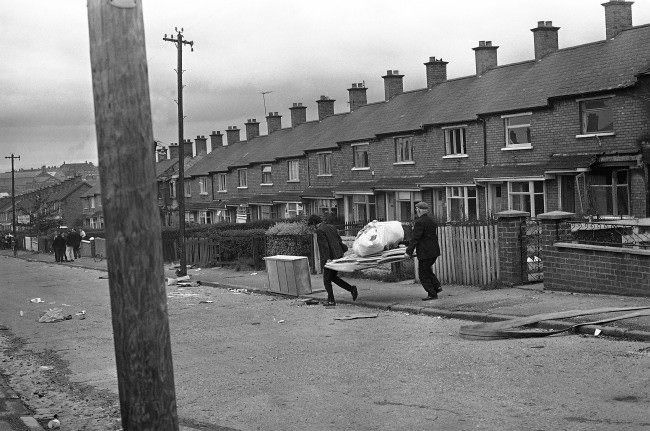
Along a long row of brick terraces in Ardoyne, Belfast, householders step into the street with what they can carry, turning an ordinary pavement into a hurried corridor of removal. Bedding and bundled possessions are heaved onto makeshift loads, while scattered debris and an uneasy emptiness stretch down the road. The title’s fear—homes being burnt out—hangs over every movement, making the everyday details of doors, fences, and chimneys feel suddenly fragile.
Two men bear the weight of a mattress and sacks, their bodies angled forward with the kind of purpose that comes from panic rather than routine. Behind them, neighbours drift in small groups at a distance, watching, waiting, or deciding what to do next, as if the street itself has become a boundary line. The calm geometry of uniform houses contrasts sharply with the improvised act of saving belongings, a stark visual reminder that civil conflict often announces itself through domestic disruption.
Dated to August 10, 1971, the photograph sits within the wider turbulence of Northern Ireland’s Troubles, when fear could push families to move before flames ever appeared. For readers searching Belfast history, Ardoyne, 1971, or the lived experience of sectarian violence, the image offers a grounded look at displacement in progress—no grand speeches, just the logistics of survival. It also preserves the small, telling details of working-class streetscape and the quiet, heavy moment when a home is treated as something that might not last the night.