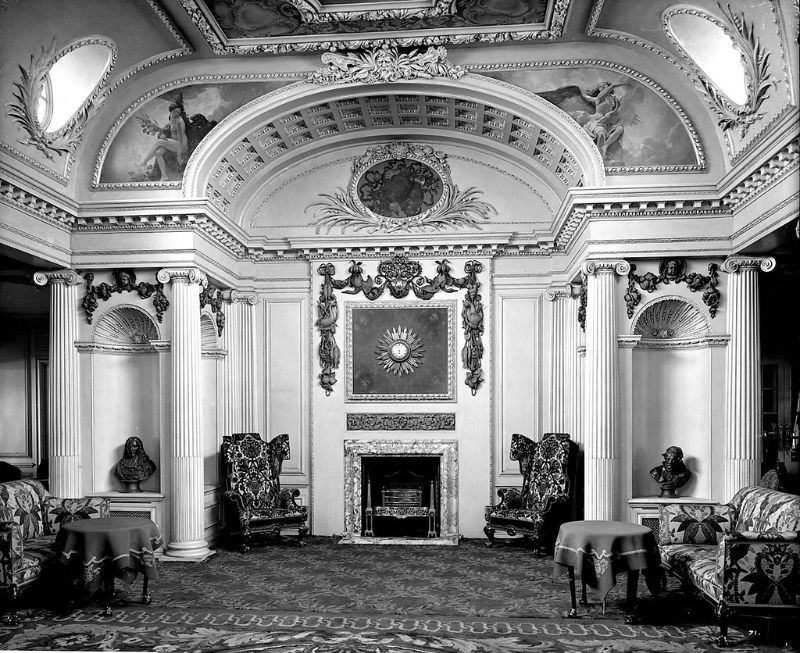
Set into a grand classical surround, the fireplace detail of Aquitania’s 1st Class Lounge reads like a salon borrowed from a palazzo rather than a ship at sea. Fluted columns, arched niches, and dense carved ornament frame the hearth, while deep armchairs and upholstered seating invite the kind of lingering conversation that defined luxury travel in the early 20th century. The symmetry of the composition—chairs standing guard at either side—turns the fireplace into both a focal point and a statement of confidence in ocean liner design.
Above the mantel, decorative panels and painted scenes lift the eye toward an ornate ceiling, where plasterwork, scrolls, and oval cartouches complete the Palladian effect mentioned in the title. Even in monochrome, textures come through: patterned fabrics, polished architectural surfaces, and the rich layering of mouldings that would have caught lamplight on an evening crossing. The room’s careful staging suggests not just comfort, but a deliberate effort to make first-class passengers feel anchored in familiar Old World elegance.
Dated May 1914 in the post title, this view belongs to the final moment when ocean liners competed as floating showcases of taste, technology, and prestige. Aquitania’s Palladian Lounge is often remembered as “the most beautiful room ever put to sea,” and the fireplace—part hearth, part monument—helps explain why. For readers interested in Aquitania interiors, Edwardian luxury travel, and the history of Cunard’s great liners, this photograph preserves a remarkable chapter of maritime design at its most theatrical and refined.