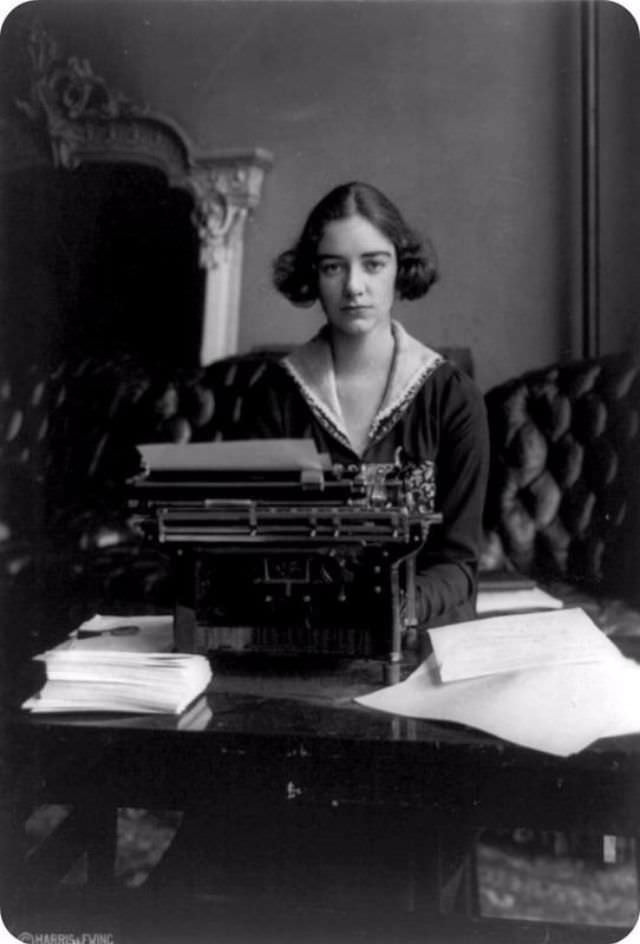
A young woman sits squarely behind a hefty early typewriter, framed by a plush, patterned sofa and the quiet formality of a parlor-like room. Sheets of paper spill across the table, hinting at drafts, letters, or office copy in progress, while the machine itself dominates the foreground with its metal levers and stacked mechanisms. Her calm, direct gaze gives the scene a sense of purpose, as if the camera has paused a working day mid-sentence.
Typewriters were more than clever past inventions; they reshaped everyday communication and helped standardize the look of business documents and personal correspondence. For many women, learning to type became a practical skill that opened doors to clerical and administrative roles, placing them at the center of modern paperwork and record-keeping. The contrast between the delicate domestic setting and the industrial precision of the keyboard underscores how quickly new technology moved from invention to daily routine.
Browsing historical photos of ladies using typewriters invites a closer look at the tools that powered the early information age—inked ribbons, neatly aligned lines, and the steady rhythm of keys. Details like the spread of blank pages and the imposing carriage suggest the patience required to produce clean text long before delete keys and word processors. Together, the portrait and its surroundings tell a story of work, ambition, and the evolving relationship between women and technology.