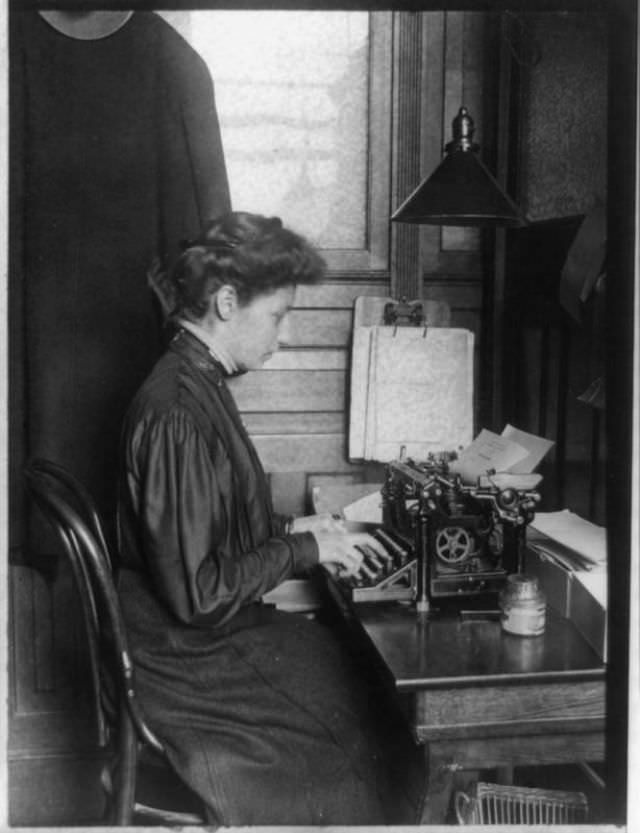
Poised at a cramped desk, a woman leans into her work as a mechanical typewriter fills the foreground with levers, keys, and turning spools. Papers fan out beside the machine, while a clipboard and a shaded desk lamp hint at the routines of office life—drafting letters, copying reports, and keeping pace with the steady demand for written communication. The scene feels intimate and practical, a quiet moment where invention meets daily labor.
Typewriters transformed writing from a slow, handwritten craft into a repeatable, professional process, and women were often at the center of that shift as typists, clerks, and secretaries. In photos like this, the posture and concentration speak to training, speed, and accuracy—skills that became newly valued as businesses and institutions expanded their paperwork. The machine itself, with its exposed mechanisms, reminds us how physically present early technology was: metal parts in motion, audible keystrokes, and inked impressions made line by line.
For readers browsing historical photos of ladies using typewriters, this image offers more than nostalgia; it’s a window into workspaces shaped by past inventions and changing expectations. The tight arrangement of chair, desk, and equipment suggests efficiency, discipline, and a world where the written word was becoming standardized through tools rather than handwriting. Whether you’re interested in vintage office history, women’s labor, or the evolution of communication technology, the details here invite a closer look at how progress sounded and felt at the keyboard.