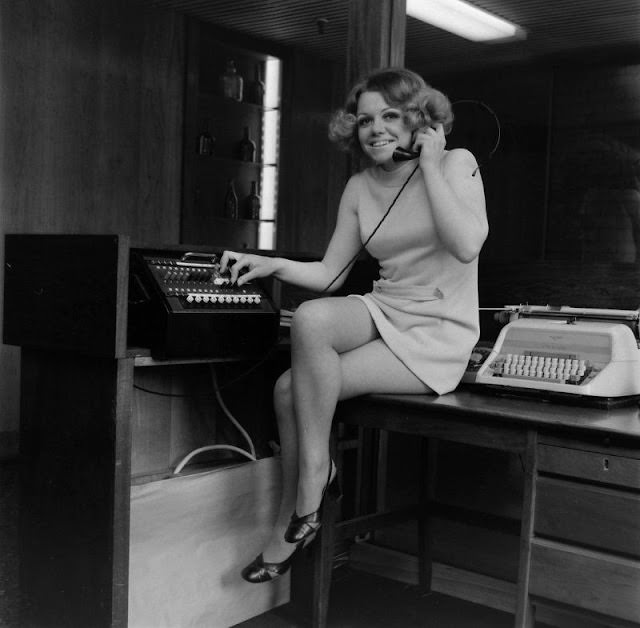
A confident young woman perches on the edge of a desk, handset to her ear, caught mid-task in a workspace that feels both practical and stylish. To one side sits a compact machine with rows of buttons and dials, while a typewriter rests nearby, ready for the next page—an everyday pairing in offices where messages, memos, and schedules moved at the pace of human hands. The wood-paneled room and angled overhead light give the scene a lived-in realism, grounding it in the routines of clerical work and communication.
Typewriters were among the most influential past inventions to reshape modern administration, and photographs like this hint at the skills behind the keys: speed, accuracy, and a steady attention to detail. For many women, mastering office equipment opened doors to paid work and new independence, even as expectations about appearance and demeanor followed them into the workplace. The juxtaposition of telephone and typewriter also marks a turning point in information flow—spoken instructions translated quickly into typed records.
For readers searching historical photos of ladies using typewriters, this post offers a vivid reminder that technology isn’t only about machines; it’s about people adapting, learning, and making systems run. Look closely at the posture, the tidy setup, and the tools within reach, and you can almost hear the clatter of keys between calls. These images preserve the texture of an era when office innovation was measured in carbon copies, ringing lines, and the rhythmic confidence of a trained typist.