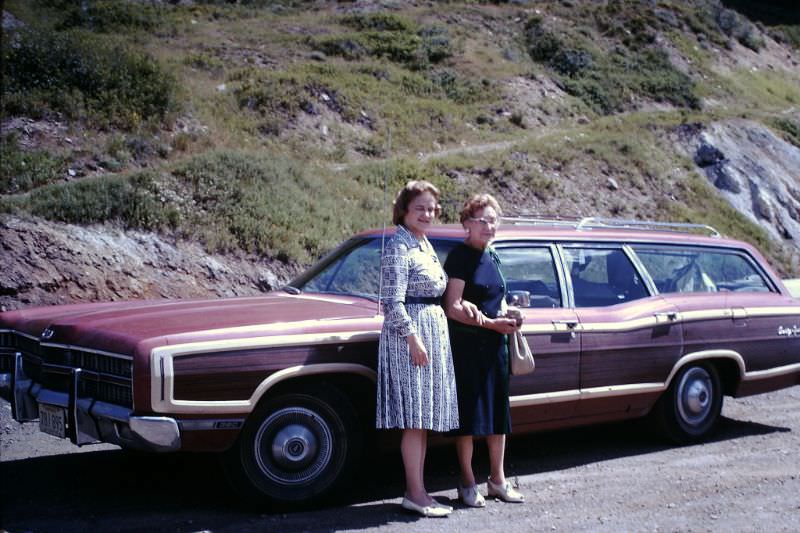
Parked along a dusty roadside, a long, wood-paneled station wagon stretches across the frame like a moving living room—chrome trim catching the light, roof rack ready for luggage, and wide windows built for backseat sightseeing. Two women pose proudly beside it, their everyday dresses and handbags grounding the moment in the social reality of family travel rather than the gloss of a showroom ad. The setting feels like a scenic stop on a road trip, with scrubby hills rising behind the car and the promise of more miles ahead.
Station wagons earned their reputation as the best family car inventions by being equal parts practical and aspirational: big enough for people and parcels, stylish enough to signal success, and tough enough for weekend escapes. Details like the faux-wood side panels—an iconic design cue in classic wagons—speak to an era when automakers blended nostalgia with modern convenience. Even without a visible signpost or captioned date, the photo evokes the heyday of the wagon as a default choice for vacations, carpools, and the everyday work of moving a household.
Nostalgia in vintage station wagon photos often comes from what they imply: the cooler packed, the kids just out of frame, the map folded on someone’s lap, and the unhurried confidence of taking the long way. In a single snapshot, the wagon becomes both transportation and backdrop—a family artifact with wheels that carried routines, celebrations, and detours. If you love classic cars, retro design, and the history of American road culture, this image fits squarely into the story of why the station wagon ruled the driveway for decades.