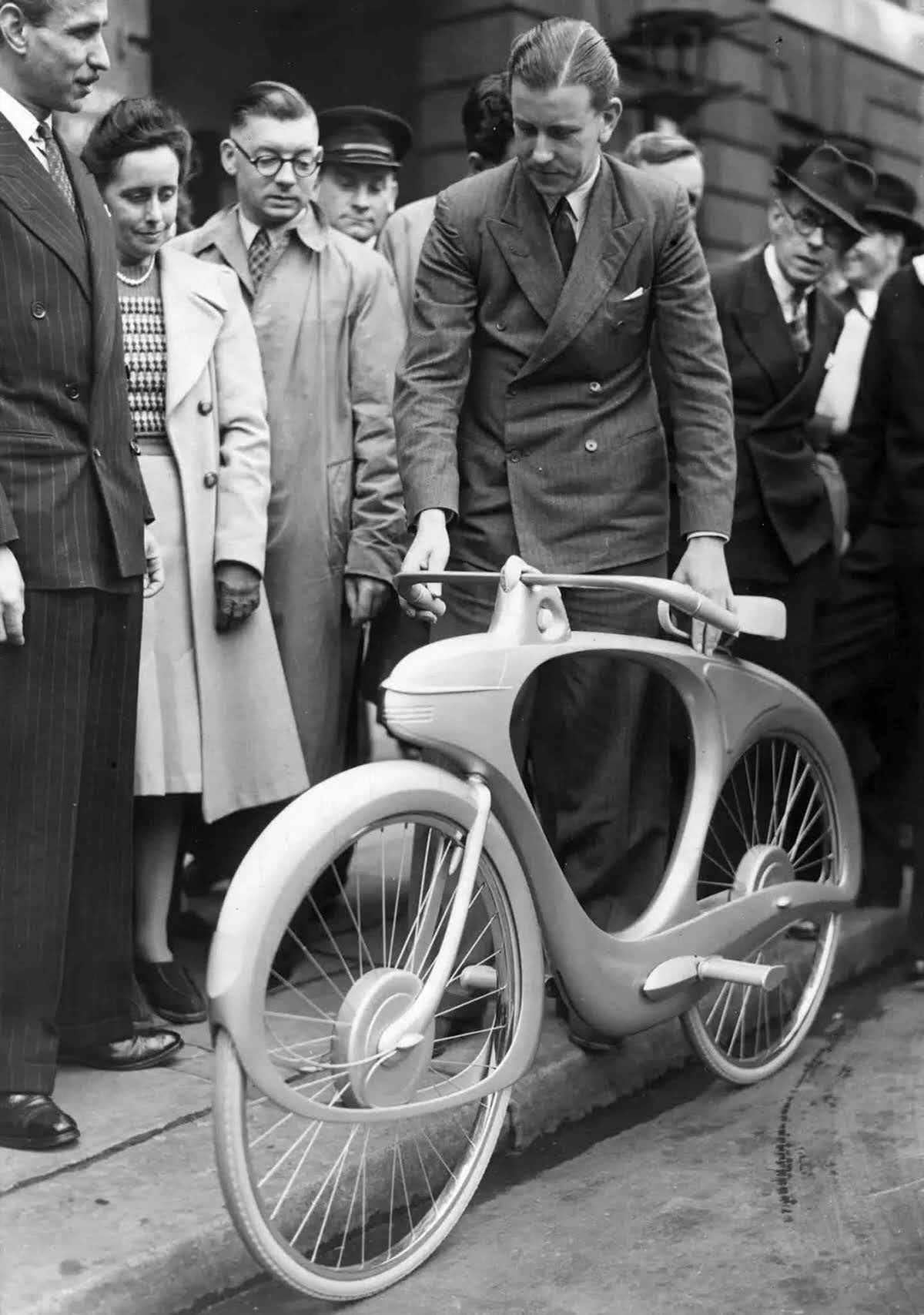
On September 17, 1946, Bowden steps into the role of demonstrator, leaning over a strikingly unconventional bicycle as a small crowd presses in to look. The scene feels like a street-corner unveiling: suited onlookers, a neat overcoat and pearls among them, and faces turned toward the machine with the kind of curiosity usually reserved for the newest gadget. Even without a workshop in view, the mood is unmistakably about invention and display.
What draws the eye first is the bicycle’s sculpted, enclosed frame, more like a streamlined shell than the familiar diamond of traditional bikes. Broad fenders, smooth contours, and a compact, integrated look suggest an effort to make cycling cleaner, sleeker, and perhaps more modern for everyday streets. Bowden’s hands on the handlebars emphasize function over fantasy—this isn’t just a concept, but something meant to be ridden.
The photograph is a small window into postwar optimism, when designers and tinkerers reimagined ordinary transportation with fresh confidence. For readers interested in mid-century design, cycling history, or the culture of inventions, this image captures that moment when a practical object becomes a public conversation. It’s a reminder that innovation often arrives not with fanfare, but on the pavement, surrounded by people deciding whether the future looks plausible.