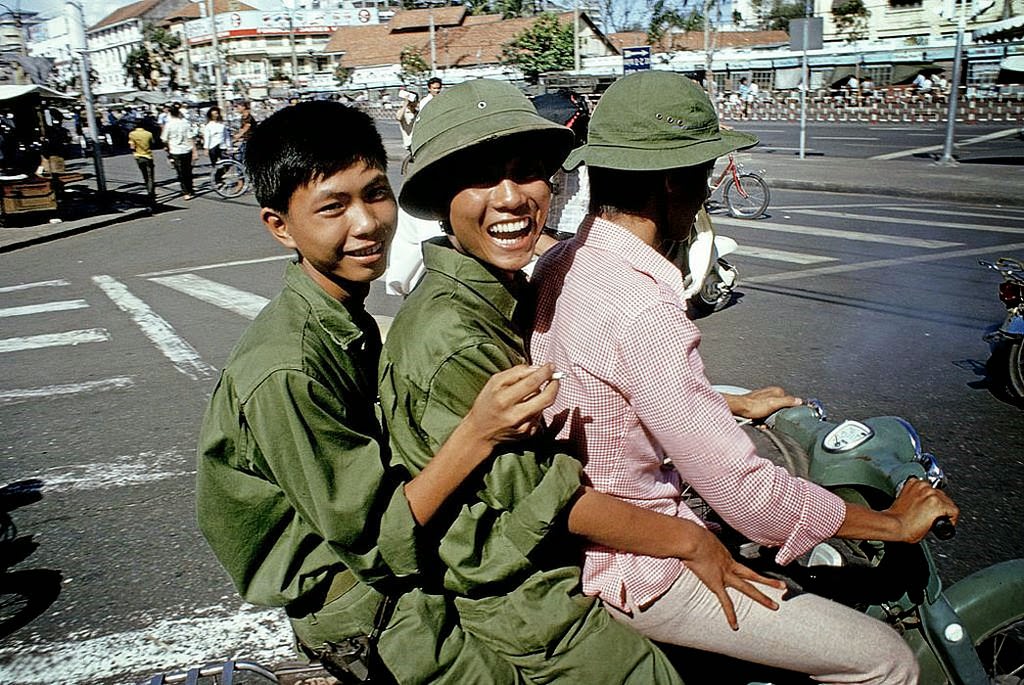
Sunlit streets and the whine of motorbikes set an unexpectedly lively stage for a day that would reshape Vietnam forever. In the foreground, three young men share a single scooter—two in military-style green with brimmed boonie hats, the driver in a pink checkered shirt—while one rider turns toward the camera with a wide, unguarded grin. Behind them, traffic barriers, bicycles, and low buildings suggest a busy city still moving through ordinary routines even as history closes in.
April 30, 1975—known as the Fall of Saigon—marks the end of the Vietnam War era and the collapse of South Vietnam’s government, followed by reunification under the North. Photos from this moment often pivot between panic and relief, and this scene leans toward the human, street-level texture of transition: uniforms beside civilian clothes, casual closeness on a cramped seat, and faces that read as exhilarated, curious, or simply swept along by the speed of events. The scooter becomes a small symbol of motion and uncertainty, carrying its passengers through a city where authority and allegiance were being rewritten in real time.
For readers searching for “Fall of Saigon April 30, 1975,” “Vietnam War ending,” or “Saigon 1975 photo,” this image offers more than a headline—it offers a glimpse of how history looked to people on the ground. The bright color, the candid body language, and the everyday street background remind us that pivotal political change is lived in ordinary spaces, between errands and intersections. Seen today, it invites reflection on what it meant to witness the final hours of one era and the first breaths of another, all from the back of a motorbike.