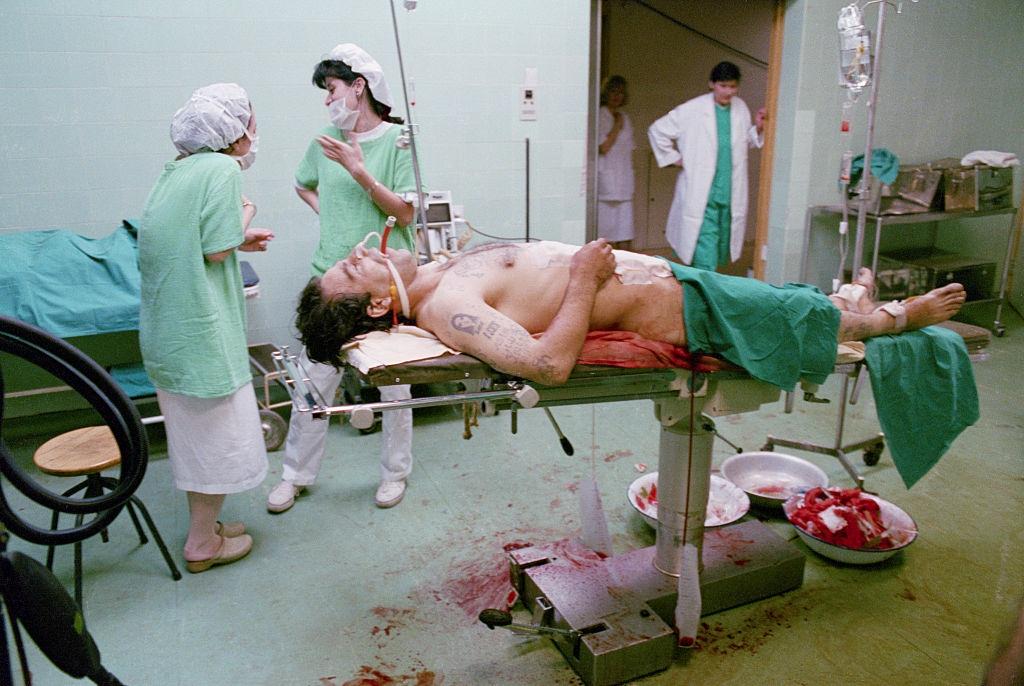
Under harsh hospital lights in Sarajevo, a wounded Bosnian fighter lies strapped to a narrow operating table, an airway tube held in place as the surgical team gathers around him. Green scrubs and white masks dominate the room, while a doctor in a coat watches from the doorway, underscoring the urgency and constant movement of a military hospital during civil war. The title’s mention of an intestinal wound from a grenade attack is echoed in the patient’s stillness and the careful readiness of the staff.
Every detail in the frame speaks to emergency medicine under siege: metal stands, IV lines, and trays positioned within arm’s reach, with blood on the floor marking how quickly life can change from battlefield to operating theatre. The scene feels improvised yet disciplined, a blend of clinical routine and wartime necessity where supplies, space, and time are never guaranteed. It’s a stark reminder that survival often hinges on minutes, teamwork, and the fragile reliability of equipment.
For readers searching for Bosnia War history, Sarajevo military hospital images, or the human cost of civil wars, this photograph offers an unfiltered view of frontline trauma care. Beyond the politics and headlines, it preserves a quieter truth—the war’s casualties were tended not only by soldiers, but by nurses and surgeons working through exhaustion and risk. In that tense room, the story becomes less about strategy and more about endurance, vulnerability, and the thin boundary between life and loss.