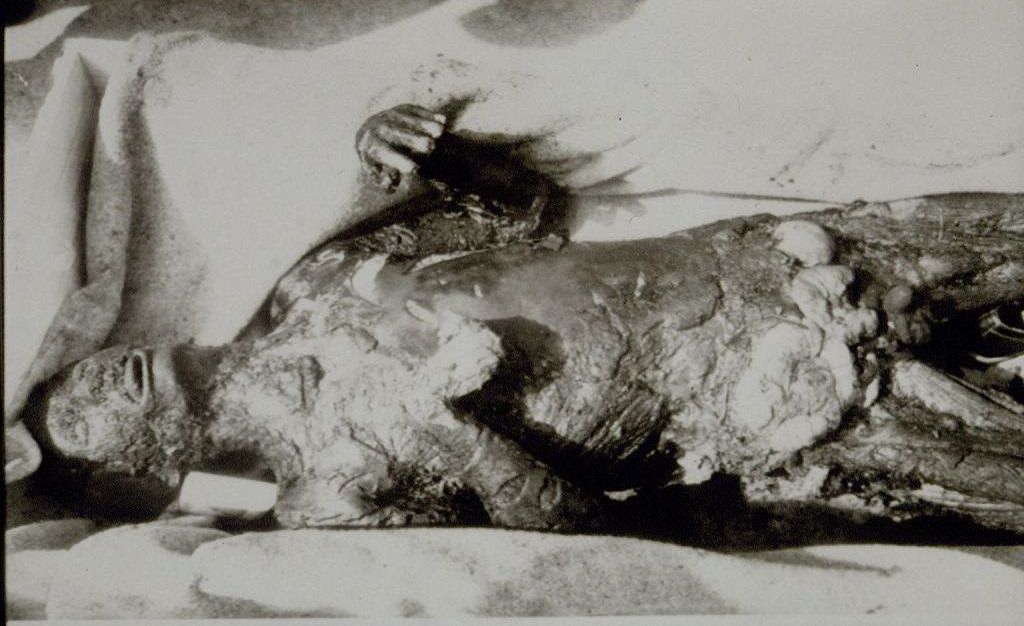
A body lies on a stretcher or sheet, the skin visibly burned and the face frozen in the stark stillness of death. The framing is close and unadorned, leaving almost no distance between the viewer and the human cost of the Bosnian Genocide in 1992. In its harsh lighting and grainy texture, the photograph reads less like reportage and more like evidence—an unbearable record of what civil war violence did to ordinary people.
War photographs often swing between battlefield spectacle and official rhetoric, but this one refuses both by focusing on a single victim. The charred injuries speak of extreme brutality, and the surrounding fabric suggests an improvised attempt at recovery or identification rather than ceremony. Nothing in the scene offers context or comfort; instead, the image forces attention to the bodily reality that statistics and timelines can obscure.
For readers seeking historical documentation of the Bosnian War and the genocide that unfolded in the early 1990s, this post preserves a difficult artifact of memory. It also raises essential questions about how societies record atrocities, mourn victims, and confront denial—especially when the dead can no longer speak for themselves. Approached with care, images like this can support education and remembrance, anchoring discussions of civil wars, ethnic cleansing, and human rights in the undeniable fact of a life violently ended.