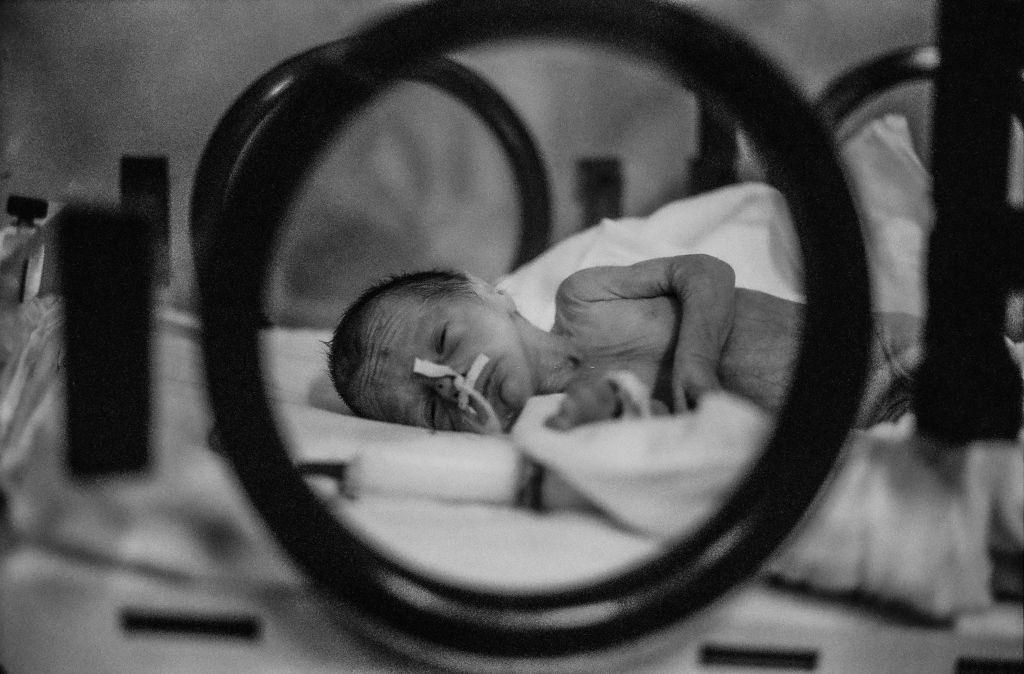
Framed by the curved bars of a hospital crib, a one-year-old child lies on a pillow, small limbs folded in a tired, protective curl. A thin tube rests at the nose, and the soft blur of medical equipment in the foreground hints at improvised care and constant vigilance. The composition pulls the viewer close, making the ward feel intimate and claustrophobic at the same time.
During the Siege of Sarajevo in 1994, hospitals became front lines of a different kind—spaces where survival depended on scarce supplies, exhausted staff, and stubborn routine. Here, the language of civil war is not found in uniforms or rubble but in the quiet signs of vulnerability: the child’s fragile body, the stark bedding, and the sense that every breath is being watched. It’s a reminder that prolonged siege warfare reaches deepest into the lives least able to endure it.
For readers searching the history of the Bosnian War, the Siege of Sarajevo, and the civilian experience of 1994, this photograph offers a direct, human anchor. It asks us to consider what “normal” medical care meant under bombardment and deprivation, and how families navigated fear while clinging to hope inside hospital walls. In its stillness, the image preserves a moment of endurance that statistics and timelines can never fully convey.