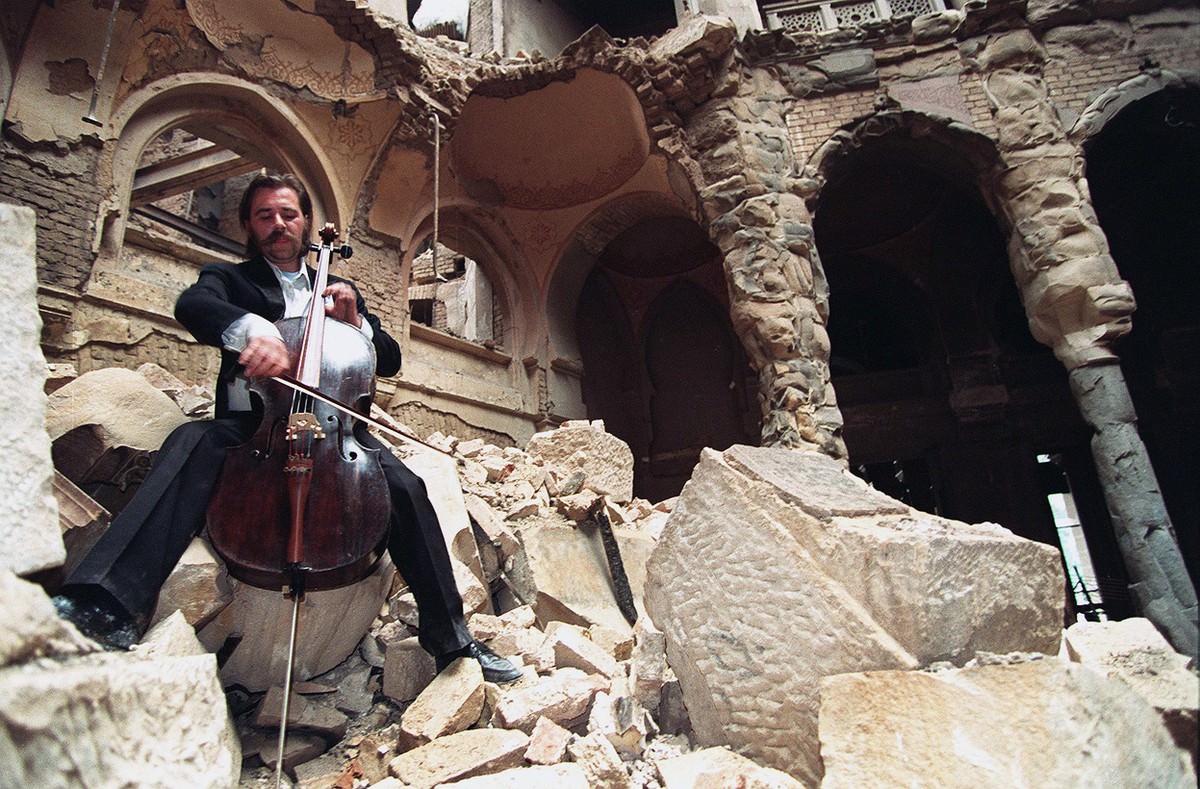
Among the shattered arches of Sarajevo’s National Library, cellist Vedran Smailović sits amid rubble and dust, his dark suit stark against broken stone and exposed brick. The scene is both intimate and monumental: a single musician framed by a ruined cultural landmark, where collapsed masonry and torn plaster replace the usual hush of reading rooms and concert halls. Even without hearing a note, the posture of the bow and the steady presence of the instrument suggest discipline held together in a place that has come undone.
The title situates the moment during the Bosnian War on September 12, 1992, when Smailović played Strauss inside the bombed-out library—an act often remembered as a defiant performance against siege and destruction. The photograph emphasizes the library’s wounded architecture: gaping openings, fractured ornament, and piles of debris that look freshly disturbed, as if the building is still mid-collapse. In that setting, classical music becomes more than repertoire; it reads as a claim that art and memory are not so easily erased.
Civil wars are frequently described through front lines and political maps, yet images like this pull history back to the scale of bodies, breath, and risk. Smailović’s performance turns a devastated interior into a temporary sanctuary, inviting viewers to consider what it means to preserve culture when institutions are attacked and public life is under constant threat. For readers searching Sarajevo siege history, Bosnian War photography, or the story of the “cellist of Sarajevo,” this post offers a powerful reminder of how music can stand in for endurance when words fail.