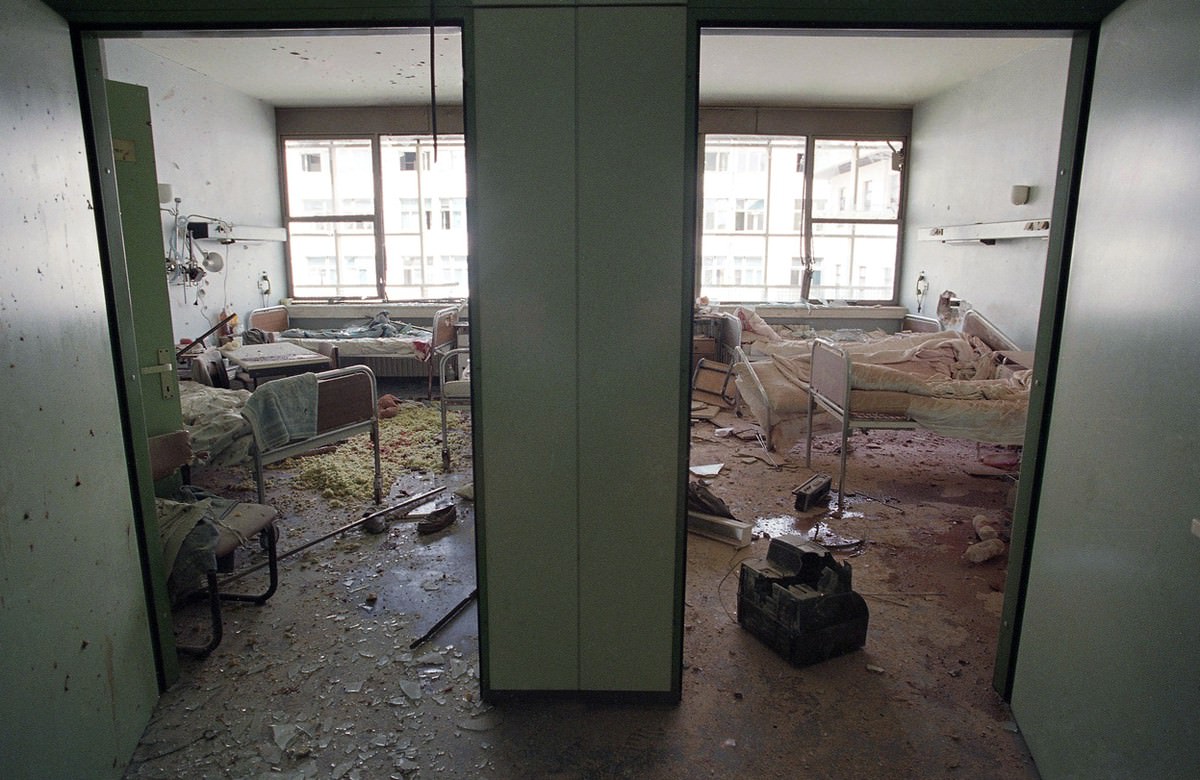
Harsh daylight pours through shattered windows into two adjoining patient rooms at Sarajevo’s Kosevo Hospital, turning the ordinary geometry of beds and bedside rails into a scene of sudden catastrophe. Glass crunches across the floor, plaster dust and fragments lie everywhere, and the neat lines of hospital life are broken by overturned frames, tangled linens, and scattered medical fixtures. Even without seeing the strike itself, the aftermath reads clearly: a civilian space meant for healing has been violently breached.
Bloodstains and debris mark the wreckage described in the title, underlining how quickly a hospital ward can become part of a battlefield during civil wars. The rooms appear recently occupied—blankets remain draped, pillows displaced, personal items and equipment left where the blast threw them—suggesting the interruption of care mid-routine. In that contrast between the clinical setting and the chaos on the ground, the photograph conveys the vulnerability of patients and staff when shells land where safety is presumed.
Placed in context, the image serves as a stark historical record of the June 16, 1995 attack mentioned in the post title, when a shell slammed into Kosevo Hospital, killing two and injuring six. It is also a reminder that wartime violence does not only claim lives at front lines; it reaches wards, corridors, and bedsides, leaving scars that are physical, psychological, and architectural. For readers searching the history of Sarajevo, the Bosnian War, and attacks on medical facilities, this photograph offers a quiet but devastating testimony.