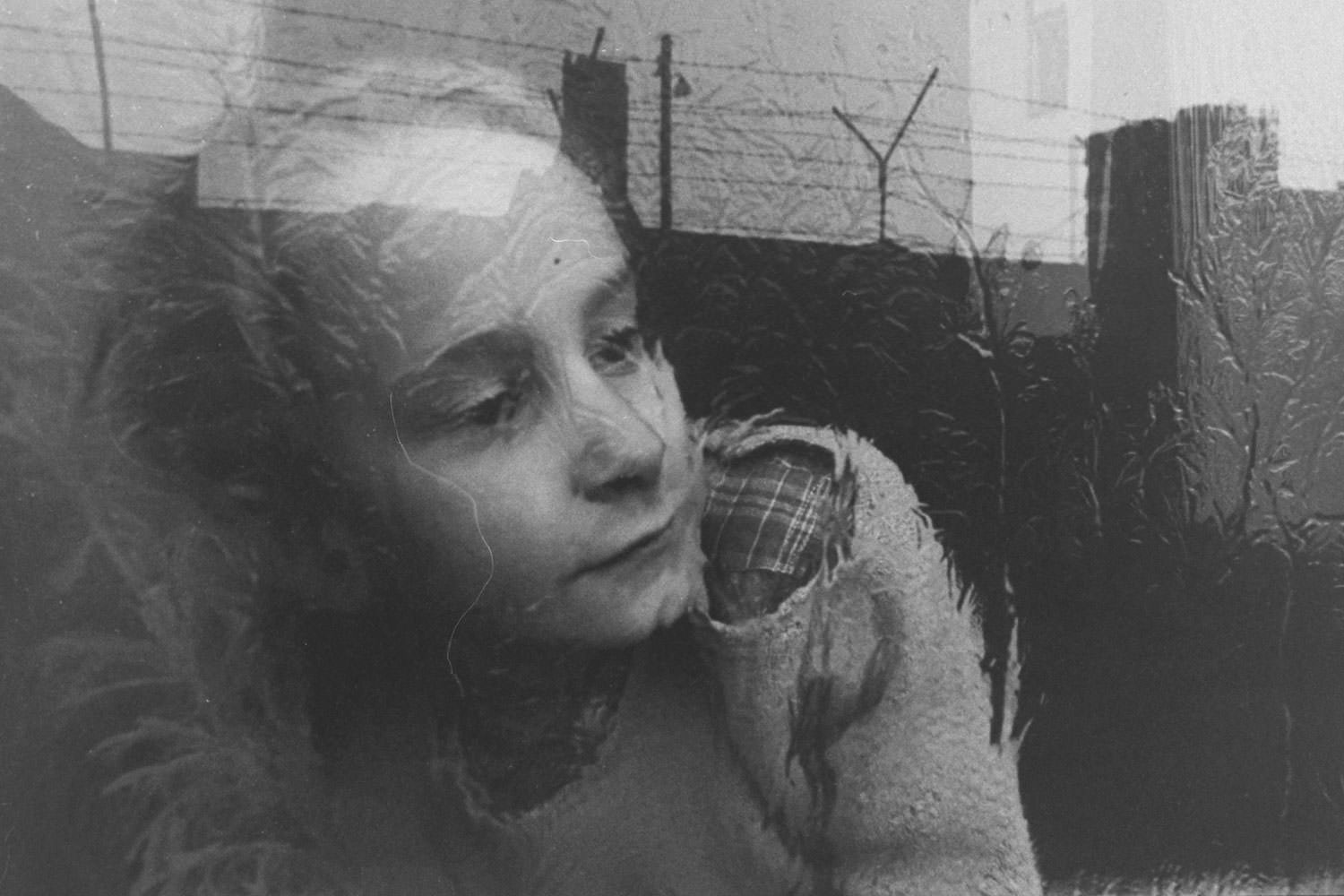
Frost clings to the windowpane, turning ordinary glass into a winter screen where Berlin’s new border appears twice—once in the distance and again as a dark reflection. A young girl presses close, her face half-softened by condensation and glare, while the Berlin Wall’s barbed wire cuts sharp silhouettes across the scene. The effect is unsettlingly intimate: childhood curiosity framed by the architecture of separation in December 1962.
In the reflected lines of wire and posts, the Cold War becomes something you can almost touch, a barrier that intrudes even into the private space of a room. Her gaze drifts beyond the pane as if trying to make sense of a city abruptly divided, where neighborhoods, routines, and families could be split by concrete and steel. The photograph’s layered surfaces—face, frost, and fortification—echo the way politics reshaped daily life, turning streets into frontiers and windows into vantage points.
Viewed today, the image reads as more than documentary evidence of the Berlin Wall; it is a quiet meditation on borders and belonging. The wintry texture suggests both physical cold and social chill, while the child’s expression holds the ambiguity of a moment that history would later define with certainty. For readers searching Berlin Wall photos, Cold War Berlin history, or December 1962 images, this frame offers a stark reminder that the era’s great conflicts were also lived in small, domestic moments.