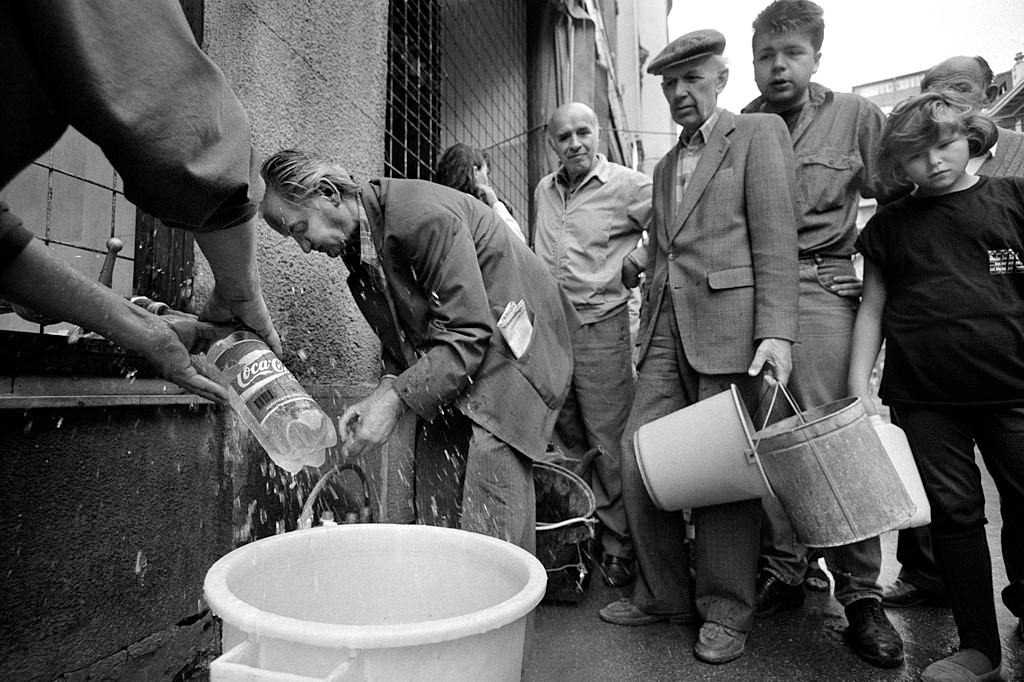
Along a Sarajevo street in July 1992, daily life narrows to the essentials: a stand-pipe, a trickle of water, and a queue of residents clutching whatever containers they can carry. Buckets, basins, and reused Coca‑Cola bottles become improvised lifelines, pressed into service as the city’s normal utilities falter under the pressures of civil war. The camera lingers on the cramped sidewalk space, where bodies lean in close and every turn at the tap matters.
Faces in the line tell a quiet story of endurance—older men in jackets and caps, younger onlookers, and a child waiting with the same seriousness as the adults. Hands steady a plastic bottle beneath the spout while water splashes into a large tub set on the pavement, an ordinary act made urgent by uncertainty. In the background, apartment facades and street-level walls frame a scene that feels both intimate and exposed, suggesting how public even the most private necessities became.
Photographs like this offer a grounded way to understand the Siege of Sarajevo beyond headlines: not only artillery and politics, but the relentless logistics of survival. The repurposed packaging and battered pails underline how civilians adapted, stretching modern consumer objects into tools for wartime living. For readers searching for Sarajevo 1992, Balkan conflict history, or the civilian experience of war, this moment at a stand-pipe captures the fragile intersection of community, scarcity, and perseverance.