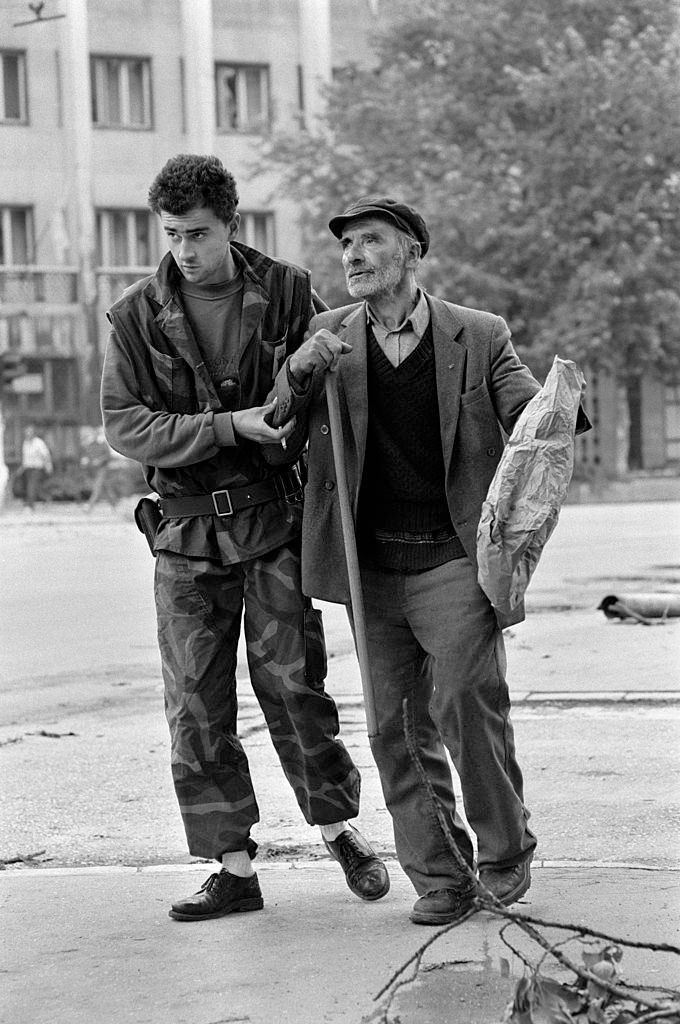
A young Bosnian fighter, dressed in camouflage and moving with practiced urgency, steadies an elderly man by the arm as they step into an exposed intersection on Sarajevo’s feared “Sniper Alley” in July 1992. The older civilian, cap pulled low and a cane in hand, clutches a crumpled paper bag—an ordinary object that feels painfully out of place in a street where hesitation could be fatal. Behind them rise the blank façades of apartment blocks and trees, a city backdrop that only sharpens the sense of vulnerability in the open road.
What lingers in the frame is not weaponry or tactics but a shared human calculation: the fighter’s alert, scanning gaze versus the older man’s determined forward look. Their body language forms a brief shelter, a moving barrier of reassurance as they cross ground that offered little mercy during the Bosnian War. In a conflict defined by sieges and civil wars, this small act of protection becomes a quiet rebuttal to the idea that violence consumes everything.
For readers searching Sarajevo Siege history, Sniper Alley photographs, or Bosnia 1992 war imagery, this picture provides a stark, intimate view of survival under fire. It reminds us that wartime heroism is often unannounced—measured in a steady hand at the elbow, a quick crossing, and the choice to help a stranger when the street itself has become a threat. Even without names or spoken words, the scene preserves a story of courage and civilian endurance amid the terror of urban sniping.