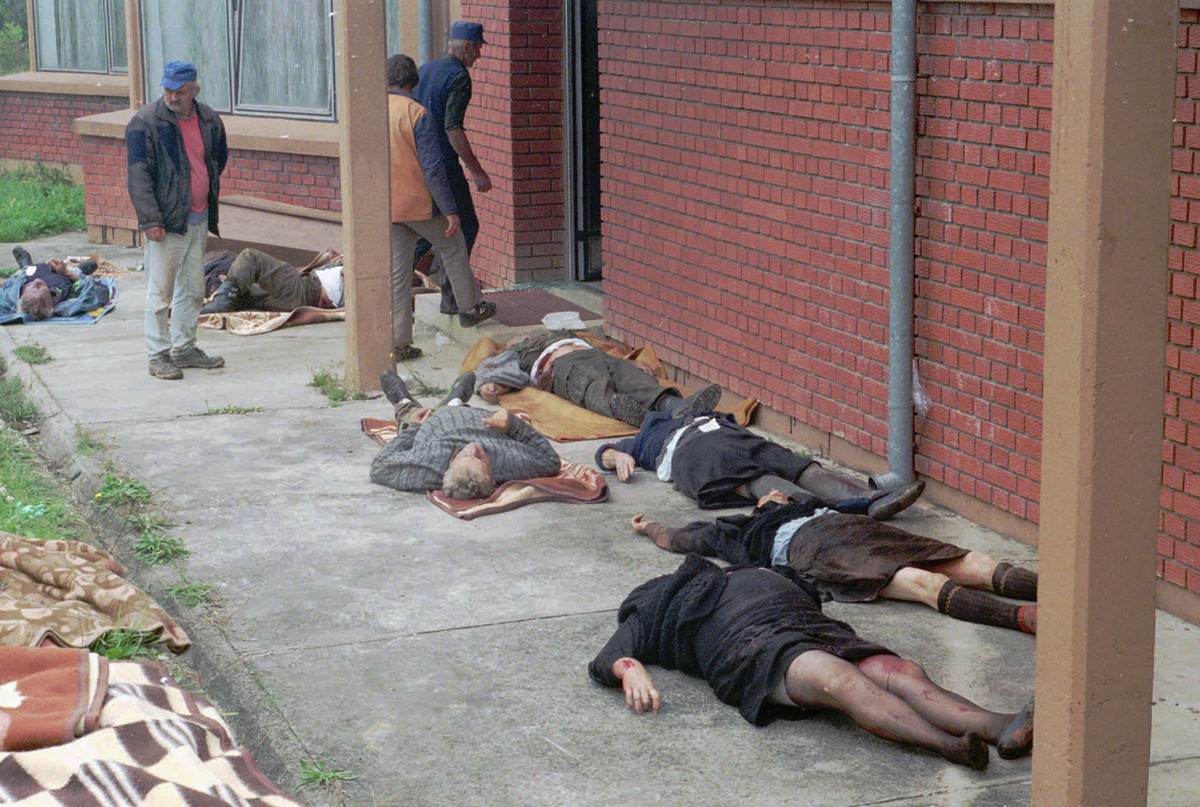
Along a concrete walkway beside a red-brick building, several bodies lie arranged on blankets and coats, their everyday clothing a stark reminder of ordinary lives interrupted. A few onlookers stand close by in work jackets and caps, hesitant and quiet, as if unsure where to place their hands or their gaze. The setting feels domestic—windows, a doorway, and a narrow strip of grass—yet the scene is unmistakably shaped by violence.
The title places this moment in Bosanska Dubica during the Bosnian War, describing Serb civilians allegedly killed in a Croatian Army commando raid on September 19, 1995. What stands out is not only the tragedy itself but the communal act of witnessing: neighbors and passersby confronting the aftermath in full view, without distance or ceremony. Photographs like this circulated through news agencies as evidence, accusation, and record, reflecting how civil wars turn streets and courtyards into contested spaces of grief and accountability.
For readers searching for historical context on the Yugoslav conflicts, this image underscores the human cost behind headlines about raids, front lines, and shifting control. It also invites difficult questions about verification, responsibility, and how “allegedly” sits uneasily beside the visible finality of death. Preserved as a historical photo, it serves as a sobering document of wartime Bosnia and the civilian suffering that defined so much of the 1990s Balkan violence.