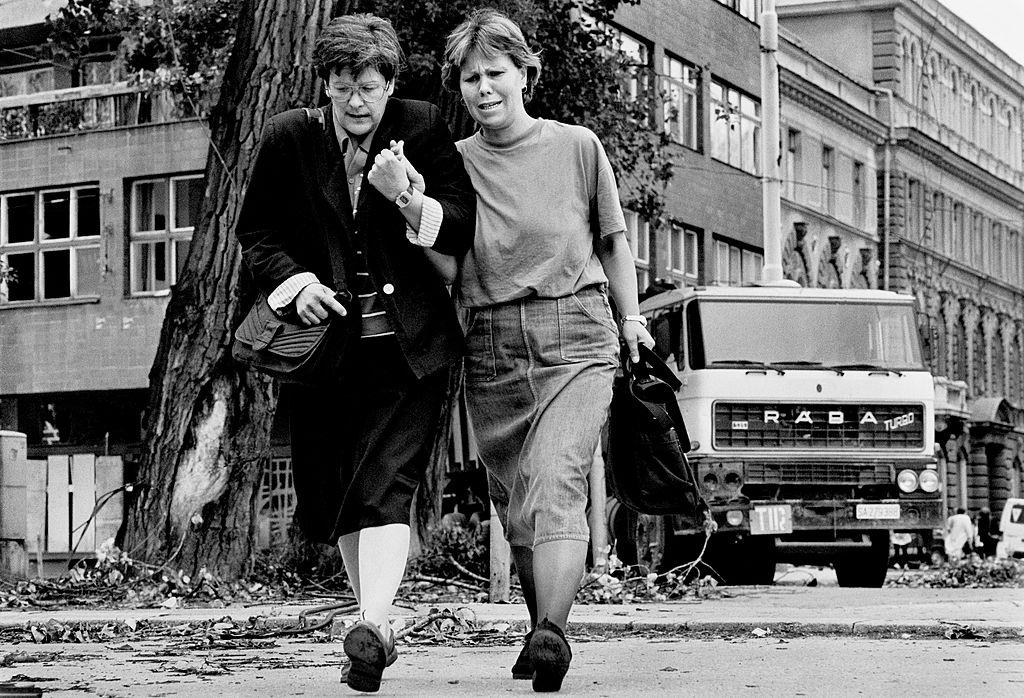
Arms linked and faces tight with concentration, two women hurry across a rubble-strewn street in Sarajevo’s notorious “Sniper Alley,” where a routine crossing could become a life-or-death gamble during the siege. The camera catches them mid-stride, leaning into each other for balance and nerve, while shattered pavement and scattered debris underline how war remade ordinary city blocks into exposed ground.
Behind them, apartment façades and a parked truck sit like silent witnesses to daily life forced to continue under threat. Their clothing looks practical rather than dramatic—skirts, a jacket, sensible shoes—an unromantic reminder that survival often depended on doing mundane errands quickly and together. The scene is not about soldiers or front lines; it is about civilians navigating danger in the spaces between home, work, and whatever remained of normal routines.
For readers searching the history of the Bosnian War, the siege of Sarajevo, or the meaning of “Sniper Alley,” this photograph distills the conflict into a single human moment of mutual support. It speaks to the improvised solidarity that sustained people when public space became a target, and how courage can look like a firm grip and a determined step. In the wider story of civil wars, it also offers a stark lesson: violence reshapes cities, but it is often neighborly care that helps people cross the worst intersections.