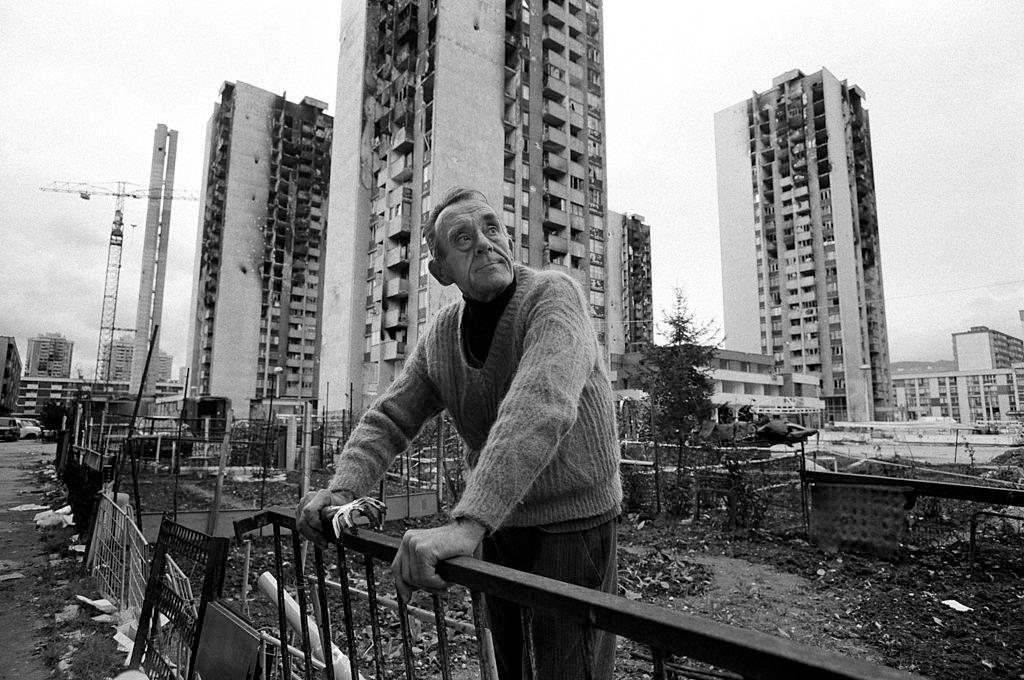
Leaning on a bent metal railing, a lone man looks off to the side as if listening for something beyond the frame. Behind him, tall apartment blocks rise like hollowed shells, their façades pocked with scars and their windows blown out, turning everyday housing into a stark reminder of civil war. The ground level is cluttered with debris, temporary fencing, and the unfinished geometry of a city trying to hold itself together.
“Heroes Square” is a name that carries more than local pride; it suggests a place where ordinary survival demanded extraordinary nerve. The danger implied by the title is echoed in the landscape—open spaces that offer no cover, high-rises that could become lookout points, and exposed streets that feel vulnerable even in stillness. In the man’s posture there’s a quiet resilience, the kind that comes from living with uncertainty long enough that it becomes routine.
For readers searching for wartime urban history, this scene speaks to the lived experience of civil wars: damaged infrastructure, disrupted neighborhoods, and civilians navigating ruins that were once familiar. The contrast between the human figure in the foreground and the towering, damaged buildings behind him creates a powerful composition about endurance and displacement. It’s a photograph that invites reflection on how conflict reshapes not only skylines, but also the daily lives and memories of the people who remain.