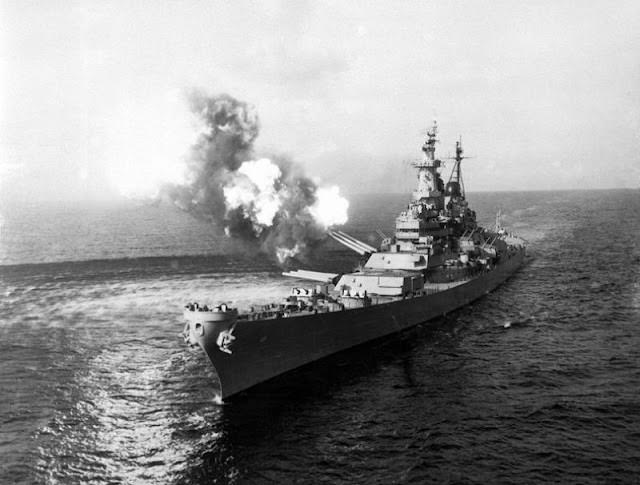
Broadsides erupt from the USS Missouri as its big-gun turrets hurl a salvo across open water, smoke and flame blooming just off the ship’s side. The battleship’s long, armored hull cuts a clean line through the sea, while the blast haze hangs in the air behind the forward batteries. In a single frame, the scale of naval artillery is unmistakable—steel, spray, and concussion turned into a rolling wall of force.
During the Korean War in 1950, firepower like this was aimed at more than enemy troops; it was also used to disrupt North Korean communications and command networks. Naval gunfire could reach inland targets from offshore, striking infrastructure and disrupting coordination in ways that shaped the tempo of operations. The title’s focus on communications underscores a key reality of modern conflict: breaking the enemy’s ability to transmit orders can be as decisive as destroying weapons.
Viewed today, this historic photo of the USS Missouri firing in 1950 reads as both documentation and warning, capturing a moment when battleship diplomacy still carried real battlefield weight. Details of the superstructure and the clustered turrets hint at the ship’s World War II pedigree, repurposed for a new war and a new strategic problem. For readers searching Korean War naval history, USS Missouri gunfire, or Cold War-era sea power, the image offers a stark, unforgettable window into how command, control, and fire support met on the horizon.