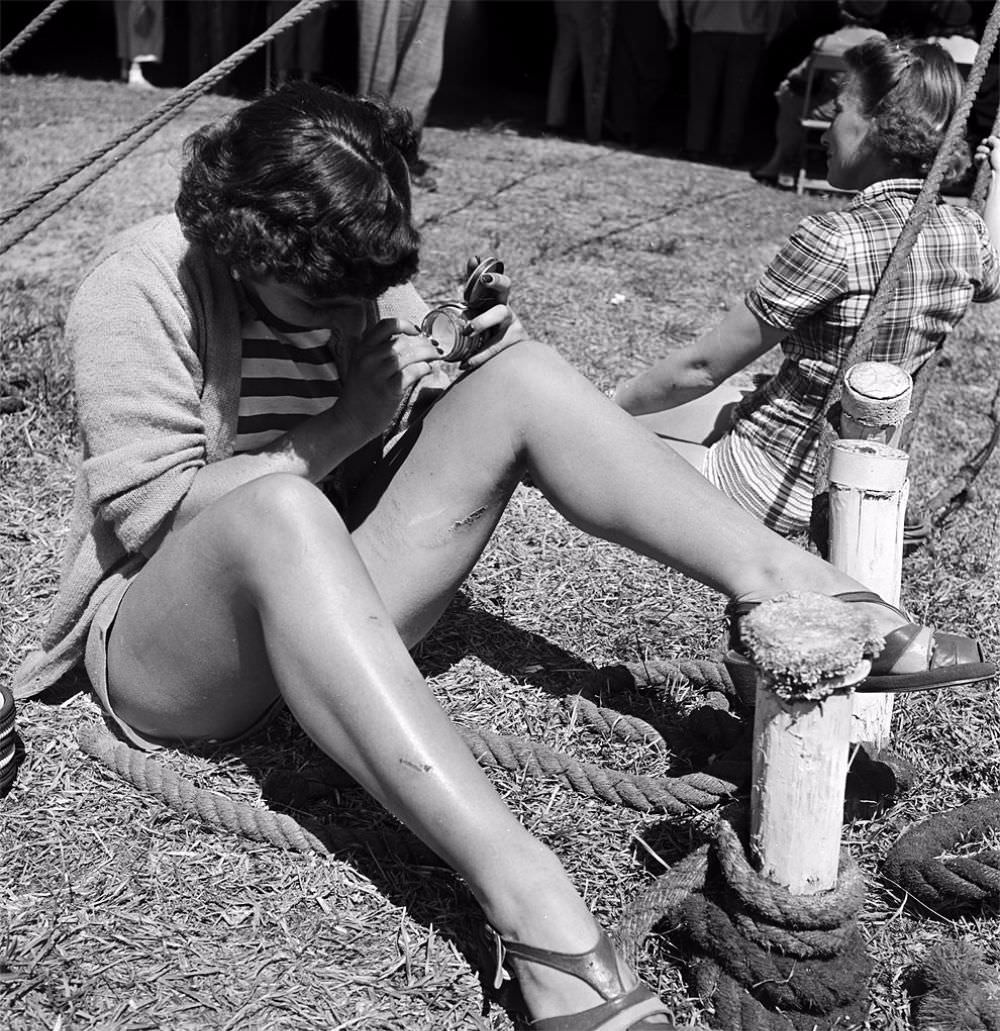
Kneeling in the grass amid thick rehearsal ropes and tent stakes, a young circus performer pauses to tend a scrape on her leg, carefully dabbing cream from a small tin. The unguarded moment—part first aid, part ritual—speaks to the physical demands behind the glamour of the Ringling Bros. and Barnum & Bailey Circus during its Sarasota, Florida training season in 1949.
Nearby, another woman sits with her back turned, relaxed but attentive, as if waiting for the next cue while the show’s machinery idles around them. The scene feels improvised and practical: costume-like shoes, everyday clothing, and the rough ground underfoot, all underscoring how rehearsal life blurred work, endurance, and brief pockets of recovery.
For readers drawn to circus history, Sarasota’s mid-century circus community, and vintage documentary photography, this image offers a rare close-up of resilience. Instead of spotlight and applause, it preserves the in-between seconds when performers managed injuries, conserved energy, and returned to training—an intimate reminder that spectacle was built on steady discipline as much as daring.