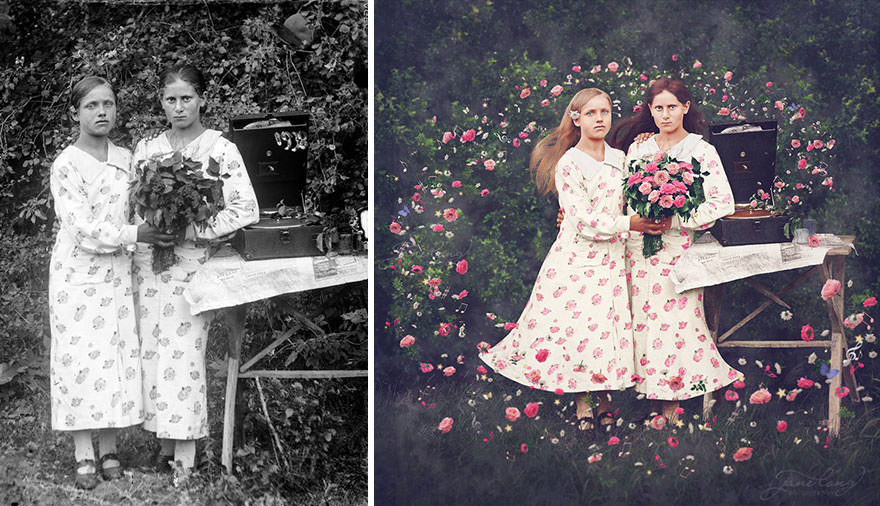
Between the original glass-plate photograph and its recolored counterpart, a quiet garden scene turns into something almost theatrical. Two young women stand close together in matching patterned dresses, their expressions steady and unsmiling, while they cradle a generous bouquet. Behind them, a simple outdoor setup—table, cloth, and a boxy camera case—anchors the moment in the practical world of early photography.
Colorization here isn’t treated as mere restoration; it reads like an interpretive act, guided by conceptual and artistic imagination. The soft greens deepen the foliage, the roses bloom into vivid pinks, and the dresses gain a lightness that makes their repeating motifs feel newly alive. Even the air seems to change, as scattered blossoms and gentle tones lend the scene a dreamlike rhythm that the monochrome version only hints at.
For readers drawn to historic glass-plate photos, this before-and-after approach highlights how color can reshape our relationship to the past—bringing texture, mood, and emotional proximity without altering the essential composition. It’s a reminder that these images were never just technical records; they were staged encounters with memory, identity, and everyday beauty. In this WordPress post, the recolor invites you to look longer, noticing the balance between documentary detail and modern creative vision.