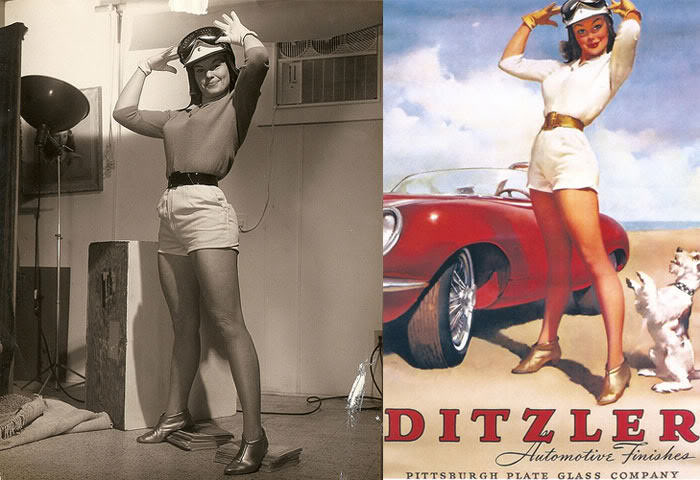
A studio set on the left reveals the unglamorous mechanics behind classic pin-up art: a woman poses under a harsh lamp, standing on simple blocks, with cables and plain walls replacing any hint of adventure. She wears a fitted top, short shorts, heels, and an aviator-style cap and goggles, holding her arms up in a playful, confident stance meant to be translated into something larger than life. The raw reference photo has the honest, workmanlike feel of commercial illustration—part performance, part craftsmanship.
Across the split, the same pose blossoms into a polished painting on the right, where lighting smooths into warm highlights, skin tones glow, and the background becomes an open, sunlit scene. A glossy red sports car, airy clouds, and a small dog turn a straightforward model session into a narrative of leisure and speed, while the figure’s proportions and styling are refined to match mid-century ideals of beauty. The transformation makes the illustrator’s priorities clear: simplify distractions, amplify allure, and convert everyday reality into a market-ready fantasy.
Pin-up models before and after editing tells a bigger story than “before/after” spectacle—it points to the real women whose labor, posture, and patience powered an entire era of advertising artwork. For readers interested in vintage pin-up paintings, retro illustration process, and the history of commercial art, this comparison is a vivid reminder that iconic images were engineered step by step, from studio reference to finished poster. Looking closely, you can almost see the handoff between camera and brush, where ordinary details are edited out and an enduring aesthetic is carefully painted in.