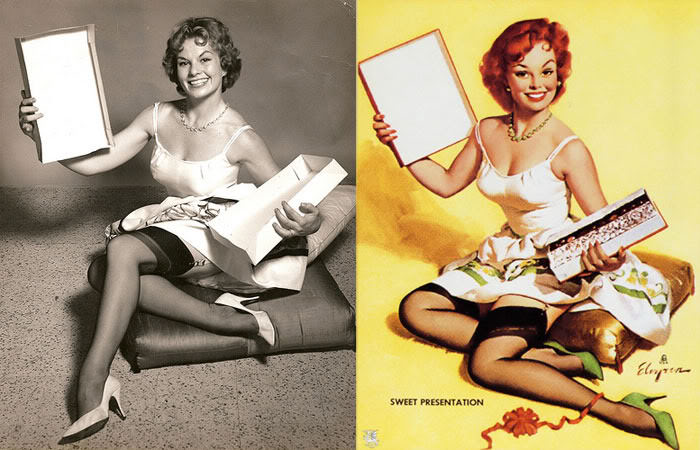
On the left, a studio portrait freezes a cheerful pin-up model mid-pose, perched on a low cushion with stockings, heels, and a playful assortment of boxes and paper in her hands. The right side answers with the finished illustration: brighter, smoother, and more theatrical, turning the same gesture into a polished fantasy of “sweet presentation.” Seen together, the pairing highlights how classic pin-up art often began with very real women and very ordinary props before the illustrator’s brush transformed everything into idealized glamour.
Between the photo reference and the final painting, small decisions do big cultural work—skin becomes flawless, color warms the scene, contours sharpen, and even the mood feels more curated. The model’s natural proportions and candid liveliness are preserved, yet subtly edited to fit the era’s commercial standards for beauty, appeal, and storytelling. That tension—authentic personality versus perfected surface—is part of what makes before-and-after pin-up comparisons so revealing for fans of vintage illustration and mid-century advertising aesthetics.
For readers interested in the history of pin-up models, editorial retouching, and the craft behind “incredibly beautiful” paintings, this post offers a clear window into process rather than myth. It’s a reminder that the iconic look of classic pin-up artwork wasn’t only imagination; it was collaboration among photographers, models, and artists, each shaping the final image. Browse the details, compare the poses, and consider what was changed—and what, quietly, stayed the same.