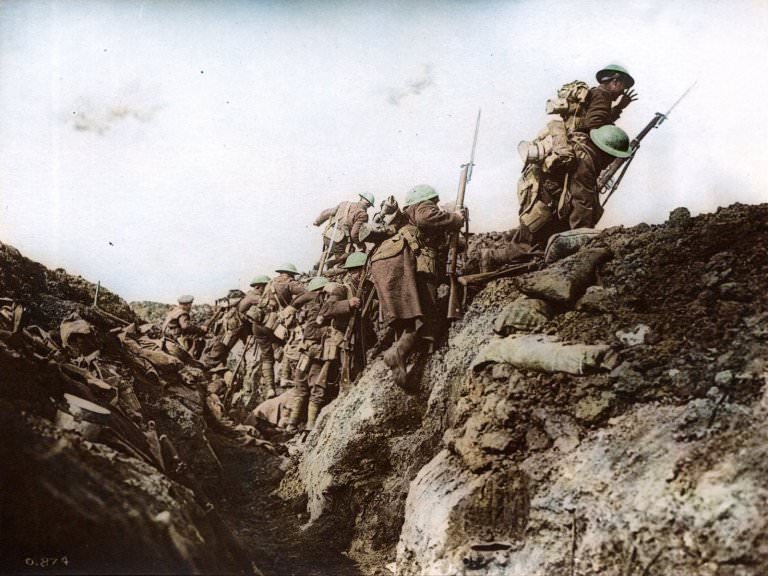
At first light, a line of Canadian soldiers climbs from the trench in a practiced rush, boots finding purchase on crumbling earth as rifles and bayonets angle forward. The colorization brings out muted khakis and the pale, misty sky, sharpening the contrast between the open air above and the narrow, shadowed trench below. Packs ride high on their backs, helmets catch the dawn, and the men bunch together at the lip where cover ends and exposure begins.
The ground itself tells the older story: sandbags sag into the mud, boards and debris press into the trench walls, and the parapet looks freshly churned by shellfire. Faces are mostly turned away or hidden by posture, yet the body language reads clearly—one after another, they go “over the top,” the infamous transition from waiting to advancing that defined trench warfare. Even without a visible battlefield beyond the frame, the composition makes the moment feel suspended between silence and impact.
For readers searching for a First World War dawn attack photo, this scene offers a stark reminder of how assaults were launched in waves from cramped trenches into uncertain ground. The tinted tones don’t romanticize the event; instead, they make details easier to read—equipment, uniforms, and the harsh texture of the earthworks—helping modern eyes connect with a century-old reality. It’s a powerful snapshot of Canadian troops at the instant the order becomes action, and history becomes lived experience.