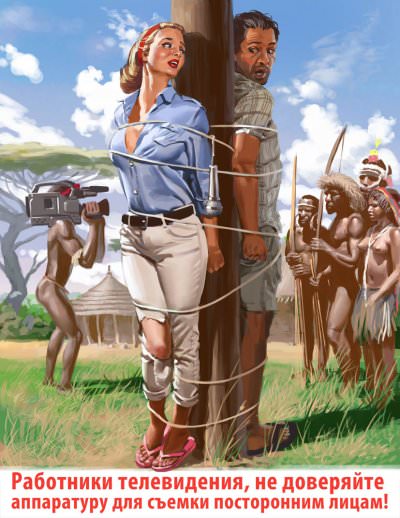
A bold propaganda-style artwork pairs the warning “Do not trust the equipment to unauthorized persons” with a vivid scene of television production gone wrong. In the center, a well-dressed woman and a man are bound to a post with cables, their anxious glances suggesting how quickly professional tools can be turned into a liability when control is lost. Behind them, lush grass, distant hills, and simple huts set a rural backdrop that heightens the sense of isolation and vulnerability.
On the left, a nearly nude figure raises a video camera overhead like a trophy, transforming a piece of filming equipment into a symbol of power rather than craft. To the right, a group of spear-carrying onlookers gathers, their stance and attention focused on the captives and the captured gear, as if the entire encounter revolves around who commands the technology. The composition leans into contrast—modern broadcast apparatus and wiring against a traditional-looking gathering—making the message readable even before the text is translated.
Across the bottom, the Russian caption reinforces the poster’s intent: a stern directive aimed at TV workers about safeguarding recording equipment from outsiders. As a historical graphic, it reflects an era when media technology carried prestige, risk, and political charge, and when workplace safety messaging often relied on dramatic allegory. For readers interested in Cold War-era visual culture, television history, and Soviet-style public warnings, this piece offers a striking example of how instruction and spectacle were fused into a single, unforgettable image.