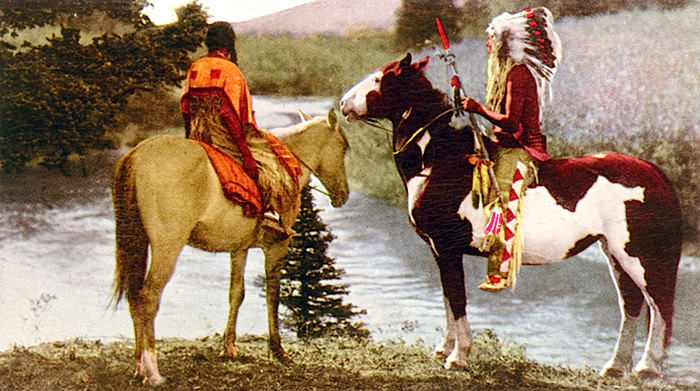
Across a quiet bend of water in what the title identifies as Glacier National Park, a Piegan couple pauses on horseback, framed by a low, wooded shoreline and distant slopes. The colorized treatment brings out the contrast between two striking mounts—one light, one boldly patterned—and the rich reds and earth tones of clothing and saddle blankets. Even at postcard scale, the scene reads as carefully composed: figures turned toward the landscape, as if sharing a moment of observation before continuing on.
Details reward a closer look, especially the regalia and riding gear that signal both tradition and the realities of travel in the early 1900s. The rider at right wears a feathered headdress and carries a staff or lance, while the rider at left sits wrapped in a fringed garment with a bright back panel that stands out against the paler horse. The backdrop of water, evergreens, and open sky situates the portrait in the popular visual vocabulary of the American West—part lived experience, part souvenir image shaped for visitors and collectors.
As a colorized photo/postcard dated broadly to circa 1890–1910, the piece invites reflection on how Indigenous presence in Montana’s Glacier region was depicted during an era of tourism and rapid change. Colorization can sharpen the sense of immediacy, yet it also reminds us that these hues are interpretive, layered onto an earlier print. For readers searching Piegan history, Glacier National Park vintage postcards, or early colorized photographs of Native American life, this image offers a vivid starting point—and a prompt to look beyond the picturesque surface to the deeper stories carried in clothing, posture, and place.