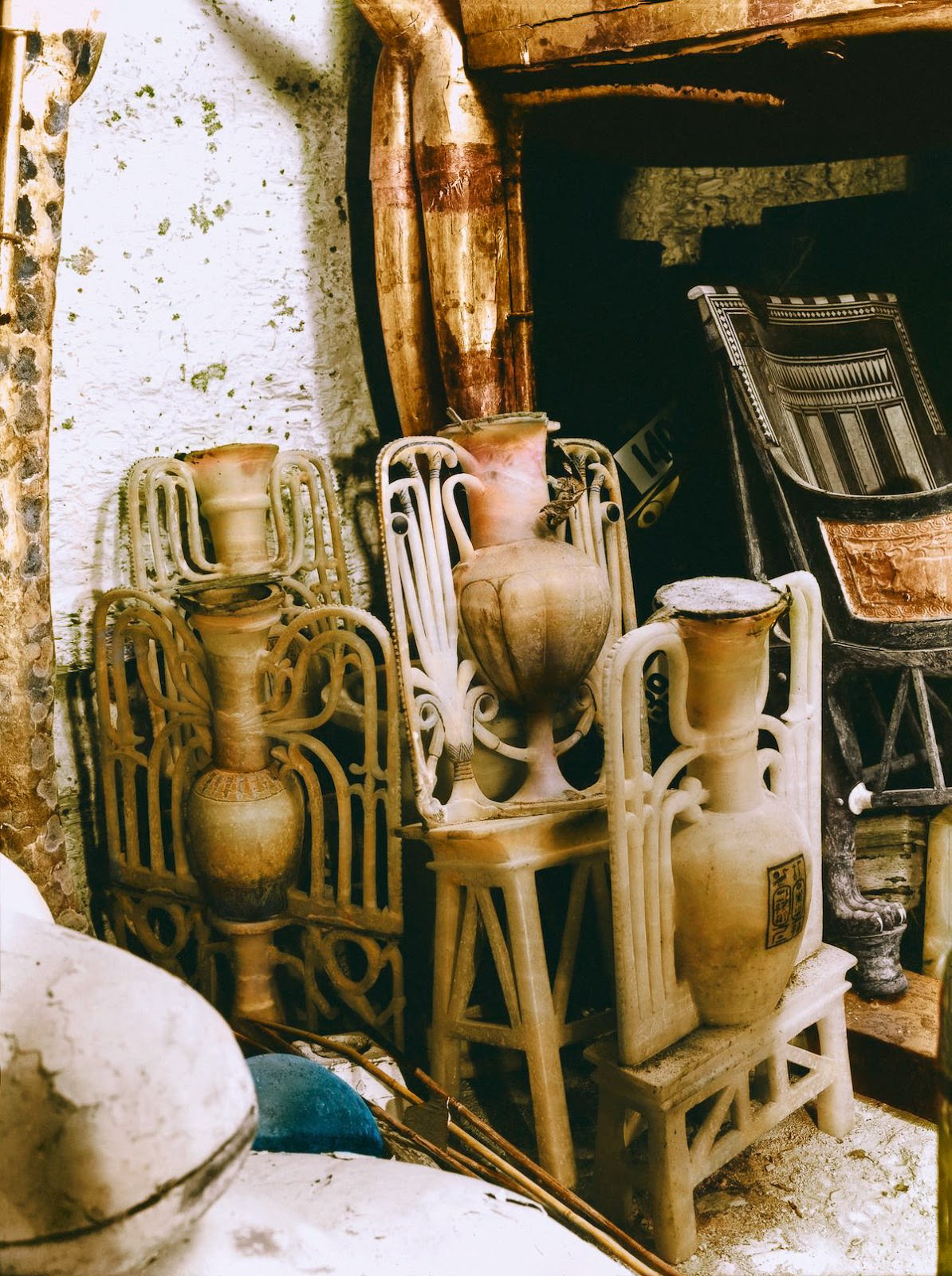
Pressed close to the west wall of the Antechamber, a cluster of sealed alabaster “unguent” vases stands as if waiting to be lifted, their pale stone warmed by modern colorization. The vessels rise from delicate, openwork frames that read like miniature shrines, with curling supports and carved motifs that turn practical containers into ritual objects. Even in this cramped corner, the polish of the alabaster contrasts with the rough, dust-streaked plaster behind it, emphasizing the sudden intimacy of discovery in Tutankhamun’s Tomb.
Between the famed animal-headed couches—cow to one side, lion to the other—these numbered pieces (Carter nos. 57, 58, 60, and 61) help map the careful inventorying that followed the tomb’s opening in December 1922. Seals remain intact, a quiet but powerful detail that speaks to ancient attempts to preserve contents meant for the afterlife, and to the archaeologists’ caution as they documented each item in situ. A small panel bearing hieroglyphic cartouches on one jar adds a crisp note of identification amid the layered clutter of furniture, containers, and ceremonial equipment.
Color brings out the tactile story: creamy translucence where alabaster thins at the rim, faint staining where time has touched the surface, and shadows pooling under the stands on the gritty floor. The composition is dense, almost airless, offering a searchlight glimpse into how packed the Antechamber was before conservation and removal began. For readers exploring Tutankhamun artifacts, Howard Carter’s catalog numbers, and the material culture of ancient Egyptian cosmetics and oils, this scene captures the intersection of meticulous archaeology and the fragile beauty of objects left sealed for millennia.