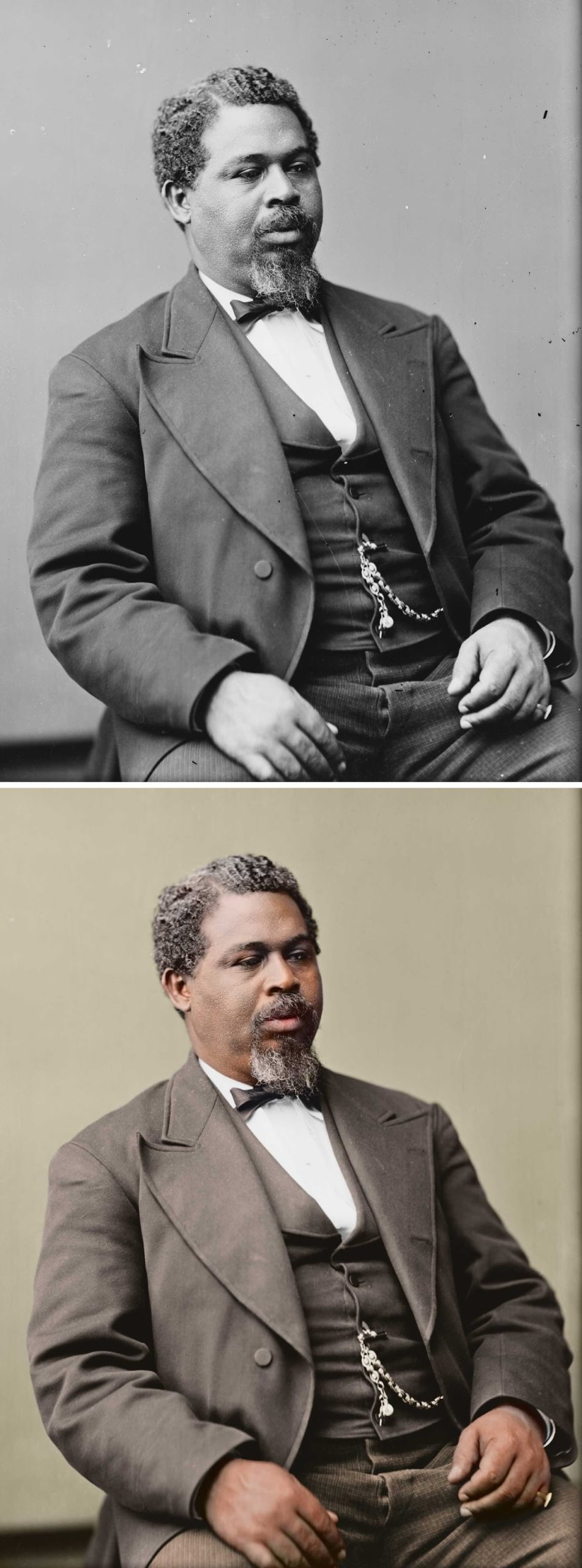
Seated in a formal studio pose, Robert Smalls meets the viewer with a steady, slightly distant gaze that suggests both caution and resolve. His dark suit, crisp shirt, and bow tie project the public image expected of a statesman, while the watch chain across his vest adds a subtle note of prosperity and order. Against a plain backdrop, the focus stays on his face and posture—an intentional presentation for an era when photographs helped define political legitimacy.
Remembered as an African American legislator from South Carolina, Smalls belongs to the generation shaped by the Civil War and its turbulent aftermath, when the meaning of citizenship and power was being fought over in courthouses and capitols as fiercely as it had been on battlefields. Portraits like this circulated as evidence of Black leadership in public life, challenging hostile stereotypes with unmistakable professionalism. The careful composition speaks to the high stakes of representation during Reconstruction and the long struggle to secure equal rights.
For readers searching the history of Robert Smalls, African American politicians, and South Carolina’s Reconstruction era, this image offers a vivid point of entry into that larger story. It invites a closer look at how former enslaved people and their allies navigated new political realities—building institutions, defending voting rights, and facing determined backlash. In the quiet seriousness of this portrait, the broader “Civil Wars” of memory, law, and belonging feel close at hand.