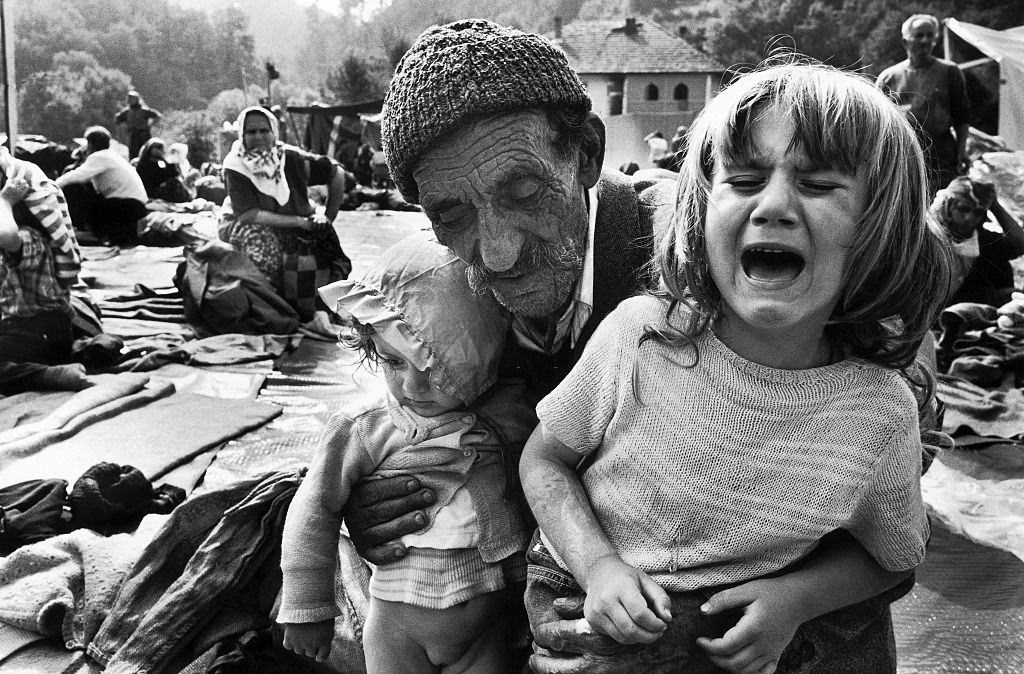
Weariness sits heavily on the grandfather’s face as he gathers his two granddaughters close, one limp with exhaustion and the other crying out in raw distress. His knit cap and weathered hands read like a lifetime of labor, now redirected into a single urgent task: keeping children safe. Around them, families rest on blankets and makeshift bedding, turning an open space into a temporary home after a long, frightening journey on foot.
In the background, the refugee camp at Kladanj comes into focus as more than a location—it becomes a crossroads of survival, where civilians wait, watch, and try to recover. A few structures and trees frame the scene, but the dominant details are human: seated figures, bundled belongings, and the posture of people who have walked too far with too little. The title’s mention of a United Nations refugee camp underscores the international relief effort that so often becomes the last thin line between flight and further danger during civil wars.
Moments like this are why historical refugee photographs endure in public memory: they compress vast political violence into one family’s embrace. The children’s tears and the grandfather’s steady hold offer an intimate view of displacement, trauma, and care amid crisis, while also hinting at the resilience that keeps families moving forward. For readers searching for Bosnia war history, Muslim refugees, UN camps, or civilian life in civil conflict, this image anchors those topics in a single, unforgettable human scene.