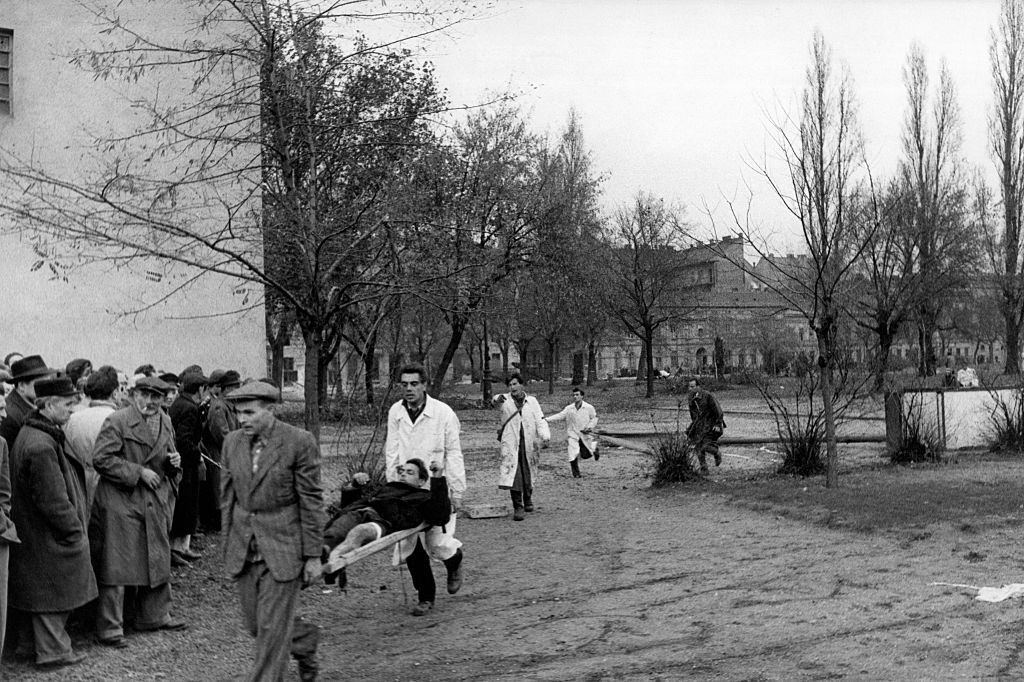
Autumn trees stand bare over a muddy path as a stretcher team moves at a brisk, practiced pace, carrying a wounded man away from danger. A cluster of civilians in coats and hats watches from the side, their faces turned toward the passing casualty, as if silently taking stock of what the revolt is costing. In the background, figures hurry across open ground toward buildings that look ordinary in peacetime, yet here become part of an improvised landscape of survival.
Budapest in November 1956 was a city where streets, courtyards, and parks could turn into corridors for evacuation in a matter of moments. The white coats of the men bearing the stretcher suggest medical order amid chaos, but their urgency hints at the uncertainty beyond the frame—whether the next volley, the next raid, or the next collapse of calm is seconds away. Even the onlookers, standing still, feel pulled into the same story of civil conflict: fear, solidarity, and helplessness mingled together.
For readers exploring the Hungarian Revolution of 1956, this historical photo offers a grounded view of revolt not as grand strategy but as human logistics—getting the injured to safety, finding shelter, and relying on strangers. The scene is rich in period detail, from clothing to the stark cityscape, making it a compelling addition to any collection of Budapest uprising images, Cold War era history, or civil war photography. It reminds us that behind every headline about rebellion are ordinary people forced into extraordinary acts of care.