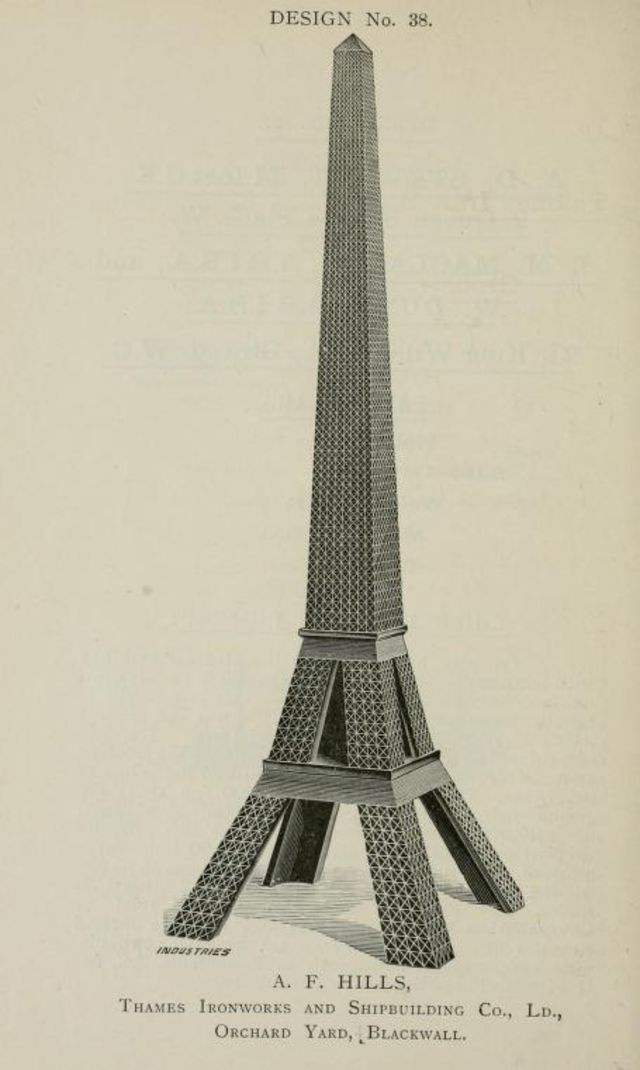
Rising like a needle above its splayed, braced feet, “Design No. 38” proposes a daring Great Tower for London, rendered with the crisp, confident linework of late‑Victorian engineering illustration. The structure leans on a lattice framework that echoes the era’s fascination with iron, height, and spectacle, tapering to a sharp cap that would have dominated the skyline. Even on paper, the design reads as both monument and machine—an exhibition piece meant to announce modernity.
Competition culture sits quietly behind this sheet: the title’s promise of “50+ competitive designs” hints at a flood of ambitious submissions, each trying to outdo the next in elegance, stability, and sheer vertical bravado. Here, the lower platforming and the dramatic open voids between the legs suggest an experience as much as a structure, with elevated viewing levels implied by the banded terraces. For anyone exploring 1890 inventions and architectural proposals, it’s a vivid reminder of how public imagination and industrial capability fed one another.
Printed credit lines at the bottom anchor the drawing in the world of shipyards and ironworks, where practical fabrication met visionary showmanship. That small detail helps explain why these proposals feel so grounded despite their scale: they were conceived by people who built big things for a living. If you’re searching for historical London tower designs, Victorian engineering drawings, or the unrealized rivals to iconic iron landmarks, this image offers a striking window into what might have been.