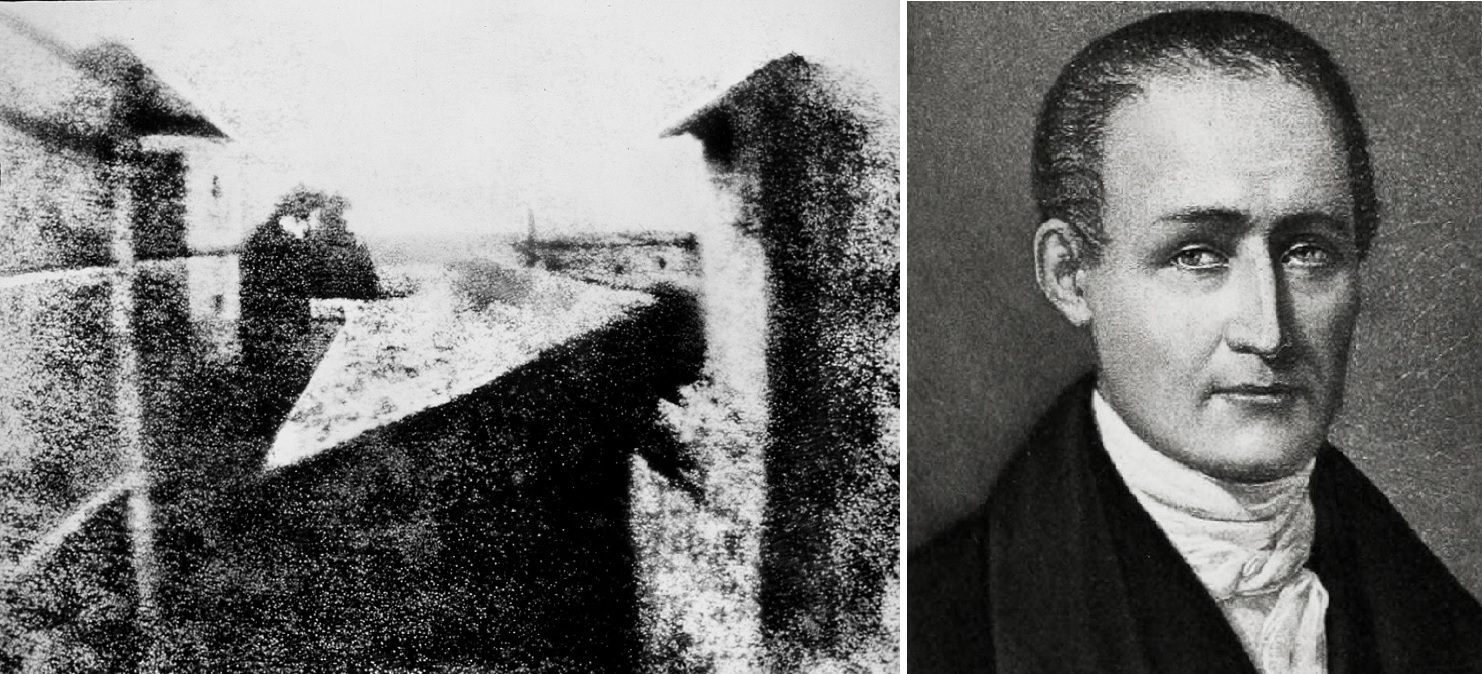
Grainy rooftops and a pale sky emerge from the haze on the left, a ghostlike view that feels half remembered and half recorded. The soft, speckled tones hint at an early photographic process struggling to hold onto light, turning ordinary buildings into a milestone in visual history. Even without crisp detail, the scene carries the thrill of invention—the moment when observation began to be fixed rather than merely described.
Alongside that experimental view sits a formal portrait of Joseph Nicéphore Niépce, presented with the steady, composed look common to early nineteenth-century likenesses. His dark coat and high white cravat underscore the era’s restraint, while the direct gaze suggests a mind intent on method and results. Paired together, the portrait and the primitive image read like a before-and-after of an idea becoming reality: the inventor and the new medium he helped bring into the world.
For readers exploring the origins of photography, this post connects the title “Photography (1793) by Joseph Nicéphore Niépce” with a broader story of technological curiosity and patient experimentation. The juxtaposition invites reflection on how early photographic images—so unlike modern clarity—still changed how people documented architecture, landscapes, and everyday life. Filed under inventions, it’s a reminder that the camera began not as a consumer object, but as a hard-won breakthrough that reshaped art, science, and memory.