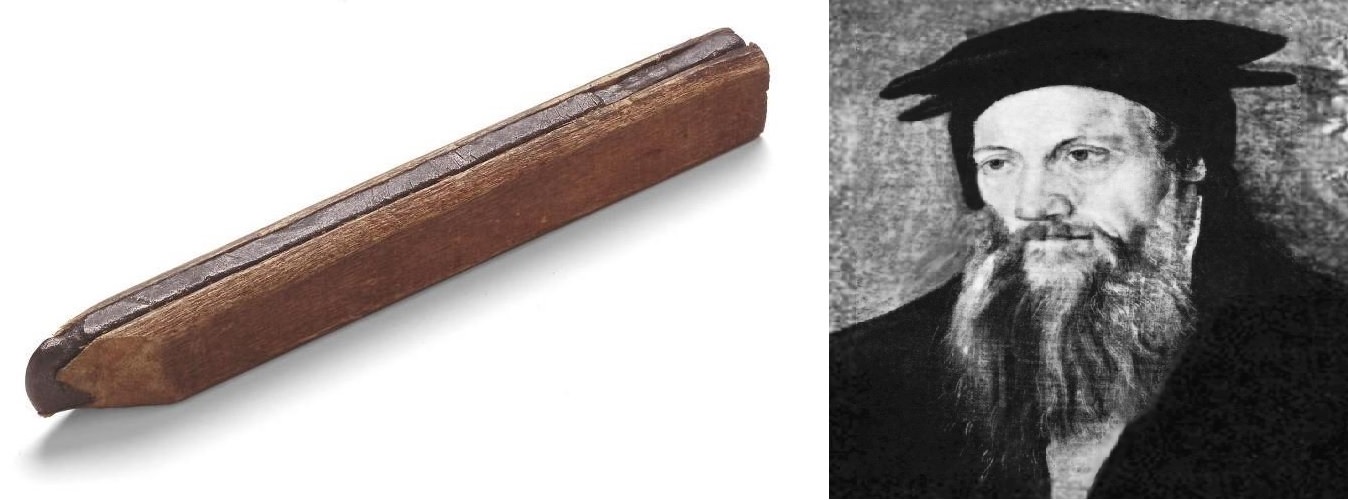
A simple wooden holder cradling a dark core sits at the center of this post, an early-looking pencil form that feels both familiar and surprisingly handmade. The grain of the wood and the exposed writing material invite a closer look, hinting at an era when turning raw substances into reliable tools was a quiet kind of ingenuity. For readers interested in the history of inventions, the object’s straightforward design is part of its charm: utility refined into something you can hold.
Conrad Gesner’s name in the title points to the Renaissance world of observation, cataloguing, and practical knowledge shared through books and illustrations. Pairing the pencil with a period portrait suggests a maker-scholar mindset, where new implements mattered because they made recording, sketching, and studying easier. Even without extra captions on the image, the connection is clear—this is about how everyday technology emerged from learned curiosity.
Pencil (1565) by Conrad Gesner works well as a reminder that “inventions” are not only grand machines but also small upgrades that reshape daily habits. A dependable writing instrument changes how notes are taken, how drawings are drafted, and how ideas travel from mind to page, especially in a culture increasingly invested in print and learning. Seen through that lens, the humble pencil becomes a milestone in the material history of knowledge.