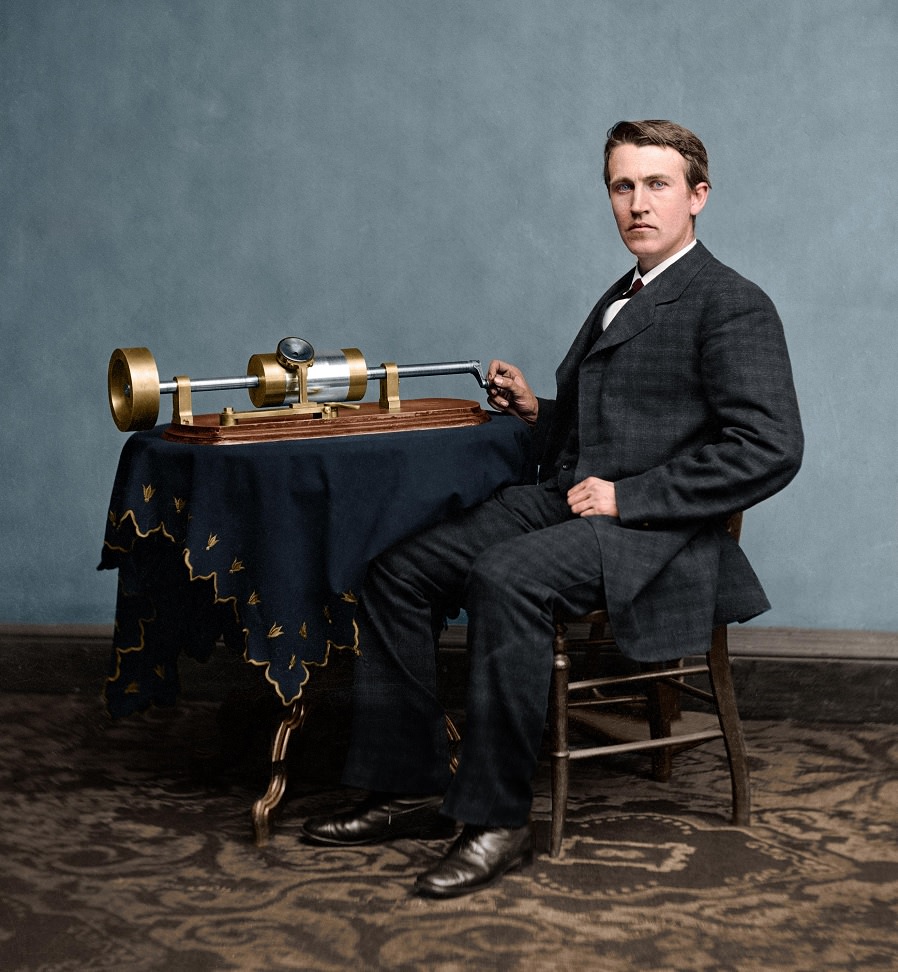
Seated beside a long, brass-and-steel apparatus, Thomas Edison poses with the calm assurance of someone introducing a new kind of wonder. The phonograph rests on a table draped in dark fabric, its cylinder centered between supports and a hand crank within easy reach, suggesting a machine meant to be operated, demonstrated, and heard. Even in a still photograph, the arrangement hints at motion and sound—an invention staged not as a curiosity, but as a practical instrument.
The title points to 1877, the year the phonograph first entered public imagination, and the device’s form makes that breakthrough feel tangible. A cylinder-based recorder represented a radical idea: that voices and music could be captured, stored, and played back on command, turning fleeting moments into repeatable experiences. In the broader story of inventions, it stands at the start of recorded audio, reshaping entertainment, communication, and the way families and communities shared culture.
Looking closely, the image invites readers to think about the human scale of innovation—an inventor in formal dress, a tabletop machine, and the promise of sound preserved in metal and mechanism. For anyone exploring the history of technology, early sound recording, or Thomas Edison’s inventions, this photograph offers a vivid gateway into the era when listening became something you could collect. It’s a reminder that modern media has roots in workshop ingenuity and careful demonstrations that convinced the world to believe in recorded sound.