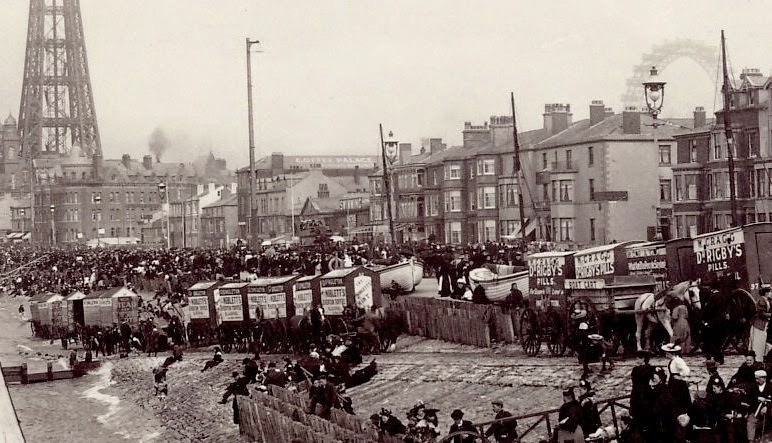
Crowds pack the shoreline in this bustling seaside scene, where rows of bathing machines form a curious wall between town and tide. The wheeled huts sit shoulder to shoulder along a fenced stretch of sand, their painted panels and bold advertising turning modesty into a kind of moving streetscape. Just beyond them, bathers wade into the surf while onlookers cluster in dense lines, suggesting how public and performative a day at the beach could be in the Victorian era.
Beneath the novelty lies a practical invention: bathing machines let swimmers change clothes out of sight and reach the water without parading through the open strand. The photo hints at the choreography—queues, attendants, and the careful boundary between “respectable” leisure and bare skin—made visible in the orderly placement of these huts. Even the commercial signage on the sides speaks to a fully developed resort economy, where privacy, recreation, and marketing rolled together on wooden wheels.
Going Swimming On Wheels gathers 50+ historic photos of bathing machines to explore how these contraptions shaped beach culture before modern swimwear norms took over. Each image reveals a different angle on Victorian seaside life, from crowded promenades to inventive engineering and the social rules that governed a simple dip in the sea. If you’re searching for bathing machine history, Victorian beach inventions, or the origins of seaside tourism, this gallery offers a vivid window into an era when swimming began with a doorway, a set of steps, and a little rolling shelter.