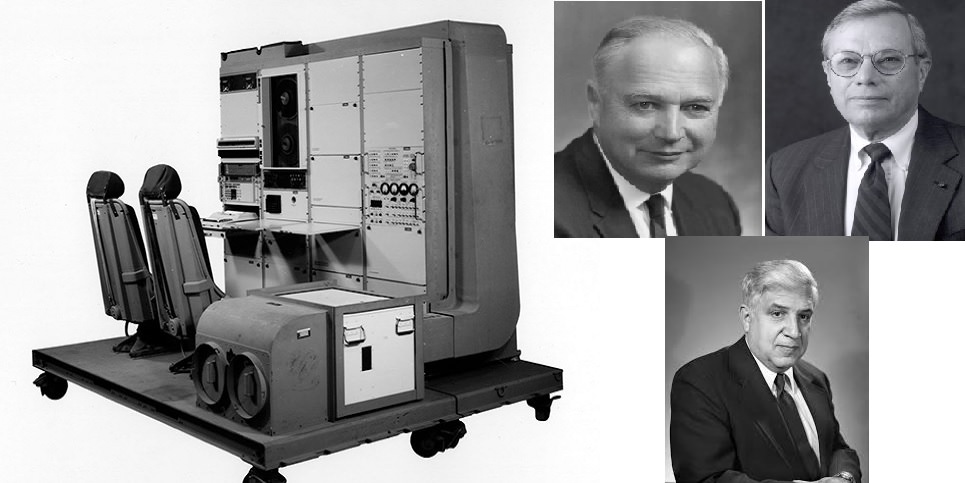
Long before GPS became a quiet, always-on feature in every phone, it existed as a room-sized promise of precision. The photo pairs a bulky early navigation setup—chairs bolted to a platform, cabinets of electronics, and panels of dials and meters—with formal portraits that remind us the system was built by people, not magic. Together they evoke the engineering reality of the early 1970s: hardware-heavy, experimental, and dependent on careful measurement and timing.
Ivan Getting, Bradford Parkinson, and Roger L. Easton are often linked with the foundational push that shaped what we now call the Global Positioning System. Their story sits at the intersection of invention, coordination, and persistence—where new ideas had to be tested, funded, standardized, and defended as practical. Looking at the equipment in the frame, it’s easy to imagine the hours spent calibrating signals, verifying results, and translating abstract concepts into reliable navigation.
For readers exploring inventions that changed everyday life, this 1973 GPS moment offers a striking before-and-after comparison: from large-scale prototype technology to the pocket-sized guidance we take for granted. The contrast between the utilitarian machinery and the composed studio portraits captures the dual nature of innovation—equal parts circuitry and leadership. As a historical photo for a WordPress post, it’s a compelling doorway into the origins of satellite navigation, early GPS development, and the engineers behind a transformative leap in modern positioning.