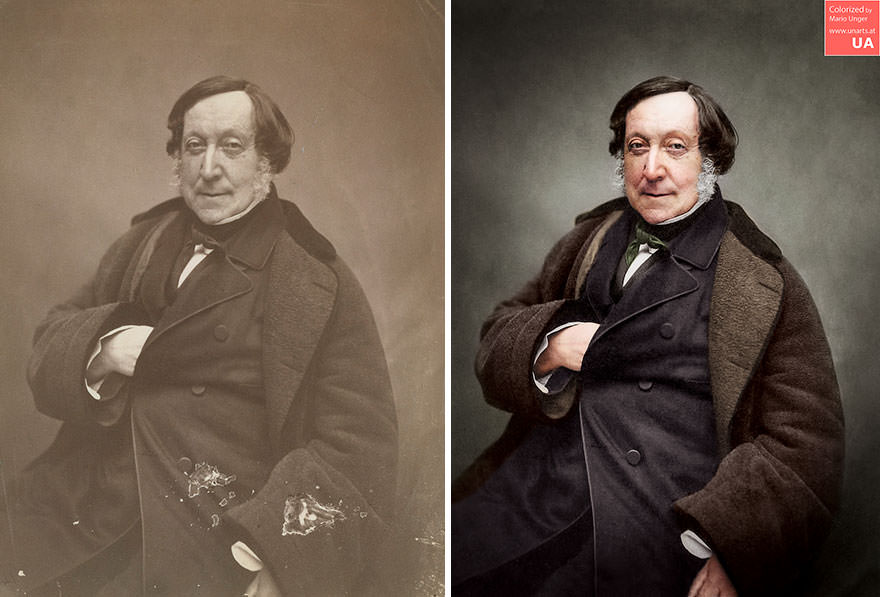
Gioacchino Rossini appears here in a late-life studio portrait dated 1856, seated and turned slightly toward the viewer with an expression that feels both reserved and alert. His heavy overcoat, neatly fastened layers, and carefully arranged cravat speak to mid-19th-century formality, while the relaxed placement of his arms gives the pose an unforced, almost conversational presence. The softly graded backdrop keeps attention on his face and silhouette, emphasizing the quiet authority of a celebrated composer at rest.
Seen side by side, the original photograph and its modern colorization invite a closer look at texture and tone: the sheen of dark fabric, the warmth of skin, and the subtle shadows around the eyes and cheeks. Color does not change the composition, but it reshapes how we read it—turning a familiar historical likeness into something more immediate, as if the distance of time has narrowed by a few steps. The result highlights small details that monochrome can hide, from the depth of the coat’s pile to the crisp edge of the white shirt cuff.
For readers searching for a Gioacchino Rossini photo from the 1850s, this post offers a compelling example of how early photography and contemporary restoration meet. It’s an evocative reminder that behind the grand legacy of opera and concert halls stood a person who once sat for the camera under studio lights, holding still while history fixed his features. Whether you come for the colorization process or for Rossini’s enduring cultural footprint, the portrait rewards lingering attention.