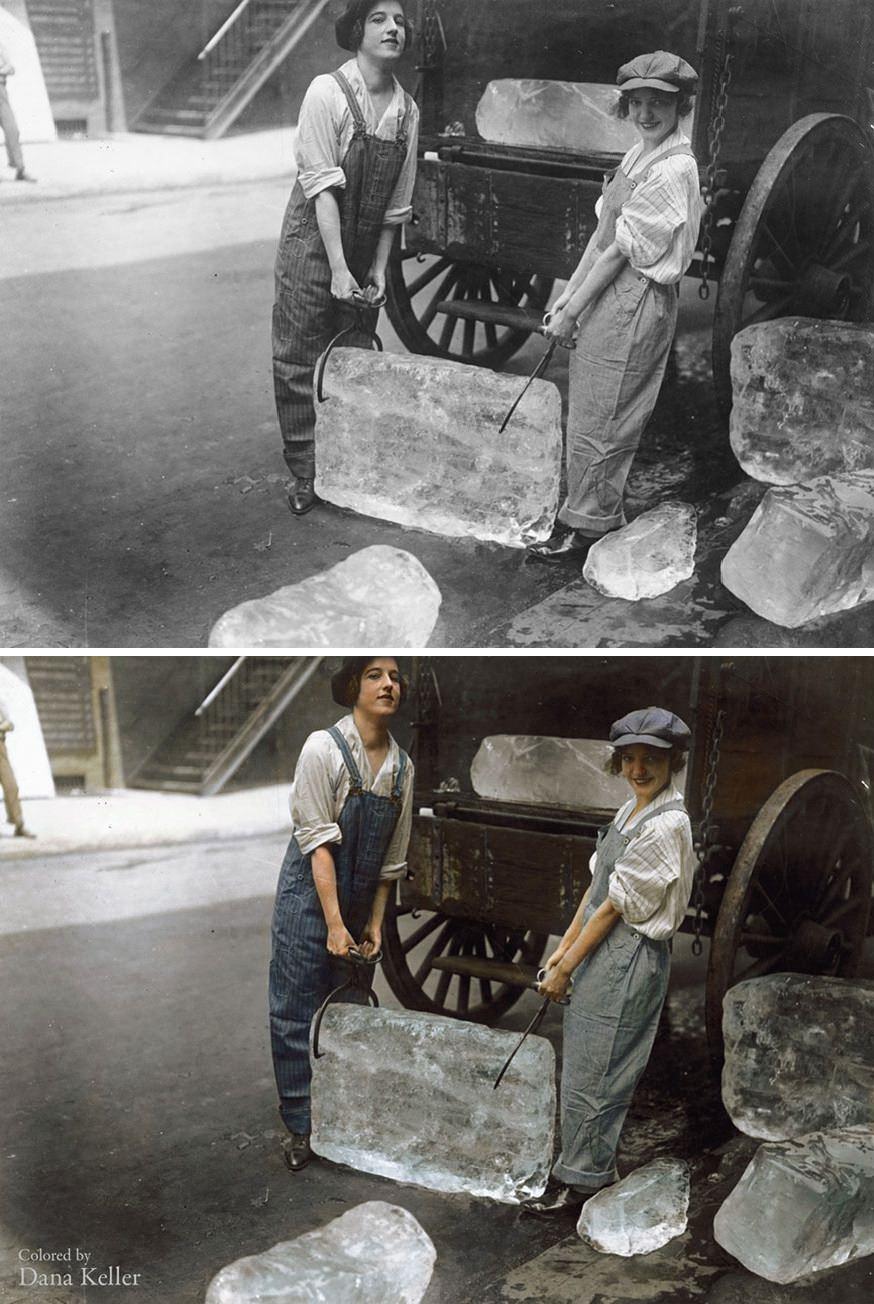
Rolled-up sleeves and sturdy overalls set the tone as two women tackle a job once synonymous with brute strength: delivering ice. In this 1918 scene, a massive, glassy block rests on the street while metal tongs and a hooked tool ready it for the next lift. Behind them, the delivery wagon’s large wheel and dark wooden body hint at the everyday machinery that kept city life cool long before home refrigerators became commonplace.
The colorization adds a vivid immediacy to the ice trade, turning what could be a distant moment into something almost tangible—the chill of the block, the wet sheen on the pavement, the grit of curbside work. Their practical caps and work shirts speak to labor rather than leisure, and their calm, direct presence challenges the era’s narrower expectations about who belonged in physically demanding jobs. It’s a reminder that the home’s comfort often began with street-level industry and hard hands.
Before electric refrigeration reshaped kitchens and commerce, ice delivery was essential to food preservation, cold drinks, and daily routines in warm months. Photos like this help tell the broader story of early 20th-century urban work, women in nontraditional roles, and the infrastructure of cold storage that underpinned modern life. For readers interested in social history, labor history, and historic photo colorization, “Women Delivering Ice, 1918” offers a striking window into an industry that once rumbled through neighborhoods as reliably as the morning mail.